

The ultimate guide to the medical device single audit program (MDSAP)
This article is an excerpt from The ultimate guide to the medical device single audit program (MDSAP) ebook.
Table of contents
- What is MDSAP?
- History of MDSAP
- Who is responsible for the MDSAP?
- How does an MDSAP audit work?
- Audit sequence
- You got a nonconformity – now what?
- What does an MDSAP audit cost?
- Why choose the MDSAP certification process?
- Potential disadvantages of the MDSAP
- Ready to participate? – Here’s how to get started
- Completing a successful MDSAP audit
The Medical Device Single Audit Program (MDSAP) was designed and developed to allow a single audit of a medical device manufacturer to be applied to all country markets whose regulatory authorities are members of the program. The MDSAP provides efficient and thorough coverage of the standard requirements for medical device manufacturer quality management systems, and requirements for regulatory purposes (ISO 13485:2016). In addition, there are specific requirements of each medical device regulatory authority participating in the MDSAP that must be met:
- Conformity Assessment Procedures of the Australian Therapeutic Goods (Medical Devices) Regulations (TG(MD)R Sch3)
- Brazilian Good Manufacturing Practices (RDC ANVISA 16)
- Medical Device Regulations of Health Canada (ISO 13485:2003)
- Japan Ordinance on Standards for Manufacturing Control and Quality Control of Medical Devices and In Vitro Diagnostic Reagents (MHLW Ministerial Ordinance No 169)
- Quality System Regulation (21 CFR Part 820), and specific requirements of medical device regulatory authorities participating in the MDSAP program.
This means that a report from a single MDSAP audit of a medical device manufacturer would be accepted as a substitute for routine inspections by all the member Regulatory Authorities (RAs) across the world. There are currently five participating Regulatory Authorities (RA) representing the following countries: Australia, Brazil, Canada, Japan and the USA.

In April, 2021, the RAs released an “Audit Approach” document (MDSAP AU P0002.006) that combines the formerly separate MDSAP Audit Model and Process Companion documents into a single guidance document. It includes guidance for assessing the conformity of each process and includes an audit sequence, instructions for auditing each specific process, and identifies links that highlight the interactions between the processes.
In March 2012 the US FDA announced that they had approved a final pilot guidance document “Guidance for Industry, Third Parties and Food and Drug Administration Staff: Medical Device ISO 13485:2003 Voluntary Audit Report Submission Pilot Program.” This allowed the owner or operator of a medical device manufacturing facility to be removed from FDA’s routine inspection work plan for 1 year upon completing a ISO 13485:2003 audit. This guidance document went into effect in June 2012, and was intended as an interim measure while a single audit program was being developed.
This pilot program was not very successful and few companies signed up because they did not see any advantage in participating. The manufacturer had to pay for a third party to inspect their facilities, generate a report, and share the inspection results back to the FDA. Many companies were reluctant to contract “someone else” to perform their inspection when they could easily wait for the FDA to conduct an inspection for free.
During its inaugural meeting in Singapore in 2012, the International Medical Device Regulators Forum (IMDRF) appointed a working group to develop a set of documents for a harmonized third-party auditor system. Hence, the “Medical Device Single Audit Program” (MDSAP) was formed. The concept was similar to the FDA’s original idea of creating a third-party auditor to help reduce their workload of performing regulatory audits of medical device manufacturers’ quality management systems. This new approach would consist of a single audit that would review regulatory QMS compliance, conducted by a third-party, who would later be called an Auditing Organization (AO).
From January 2014 to December 2016, five countries participated in a Medical Device Single Audit Program Pilot. In June 2017, a report was generated summarizing the outcomes of prospective “proof- of-concept” criteria established to confirm the success of the program. The outcomes are documented in the final MDSAP Pilot Report and recommended that the program become fully active and open to any manufacturer who requested this type of audit.
The governing body of the MDSAP is the Regulatory Authority Council (RAC), which is composed of two senior managers (and a few other staff members) from each participating RA. They are responsible for executive planning, strategic priorities, setting policy, and making decisions on behalf of the MDSAP International Consortium. The RAC also reviews and approves documents, procedures, work instructions, and more. The mission of the MDSAP International Consortium is to jointly leverage regulatory resources to manage an efficient, effective, and sustainable single audit program focused on the oversight of medical device manufacturers on a global scale.
Other international partners that are involved in the MDSAP include:
MDSAP Observers:
- European Union (EU)
- United Kingdom’s Medicines and Healthcare products Regulatory Agency (MHRA)
- The World Health Organization (WHO) Prequalification of In Vitro Diagnostics (IVDs) Program
MDSAP Affiliate Members:
- Argentina’s National Administration of Drugs, Foods and Medical Devices (ANMAT)
- Republic of Korea’s Ministry of Food and Drug Safety
- Singapore’s Health Sciences Authority (HSA)
The observers and affiliate members are not the same as the participating member RA’s. The observers simply observe and/or contribute to RAC activities. Affiliate members, on the other hand, are interested in engaging in the MDSAP program and are subject to certain rules. They are only given access to a certain level of information about the manufacturers, audit dates, and information in audit reports.
They are also invited to attend sessions that are open to members, observers, and affiliates only.
Audits can also be conducted by MDSAP participating RAs at any time and for various reasons including:
- "For Cause" due to information obtained by the regulatory authority
- as a follow up to findings from a previous audit
- to confirm the effective implementation of the MDSAP requirements
The purpose of audits conducted by the RAs is to ensure appropriate oversight of the AOs MDSAP auditing activities. The AOs are appointed by the RAs and a list of the currently approved AO’s is published on the FDA website. Most AOs offer a broad range of management system certification services, beyond just medical devices. Manufacturers should verify that prospective AOs are clearly trained and perform MDSAP audits of medical devices.
AOs have the final word as to whether a manufacturer has met the requirements for the MDSAP during the execution of the audit and generation of the associated reports summarizing the results. MSDAP RAC participating RAs have the final decision regarding all development, implementation, maintenance, and expansion activities associated with the program.
Although an unannounced visit by an AO is rare, it can happen in circumstances where high-grade nonconformities have been detected.
To continue reading this eBook including a detailed look at the MDSAP audit process and grading, pros and cons of the approach, and how to get started please register to download the full version.
The beginner's guide to the FDA 510(k)
This article is an excerpt from The beginner's guide to the 510(k) ebook.
Table of Contents
- Introduction
- 510(k) basics
- Contents of a Traditional 510(k)
- 510(k) submission and timelines
- Other 510(k) forms
Congratulations! You have successfully developed a new medical device. Now you need to take it to market. In the United States, this often means submitting a 510(k). A 510(k) is a structured package of information about your device and its performance and safety that you submit to the Food and Drug Administration (FDA) for “clearance” before you can sell your device in the U.S. In order to receive clearance from the FDA, your 510(k) will need to demonstrate that your medical device is substantially equivalent to another legally marketed device (called a predicate device). The substantial equivalence approval process is a simple equation that looks something like this:

The 510(k) is generally the most efficient route to market clearance in the U.S. because you show your device is safe and effective based on this substantial equivalence standard, instead of needing to present more extensive clinical trial data.
There are three types of 510(k): Traditional, Abbreviated, and Special. This eBook will begin with a general overview of the 510(k) process, including its purpose and benefits. Next, we will explore the Traditional 510(k) and the sections and components required in depth. Finally, we will look at the Special and Abbreviated 510(k).
FDA: background and device oversight
Before we explain what a 510(k) is let’s first talk generally about the FDA and device oversight. The FDA is the U.S. governmental agency responsible for overseeing medical devices, drugs, food, and tobacco products. When it comes to medical devices, the FDA’s mission is to “protect the public health by ensuring the safety, efficacy, and security of…medical devices.” At the same time, the FDA also has an interest in “advancing public health by helping to speed innovations.” In other words, the FDA’s goal is to make sure devices are safe and effective for public use, while also ensuring that devices have a quick and efficient path to market.
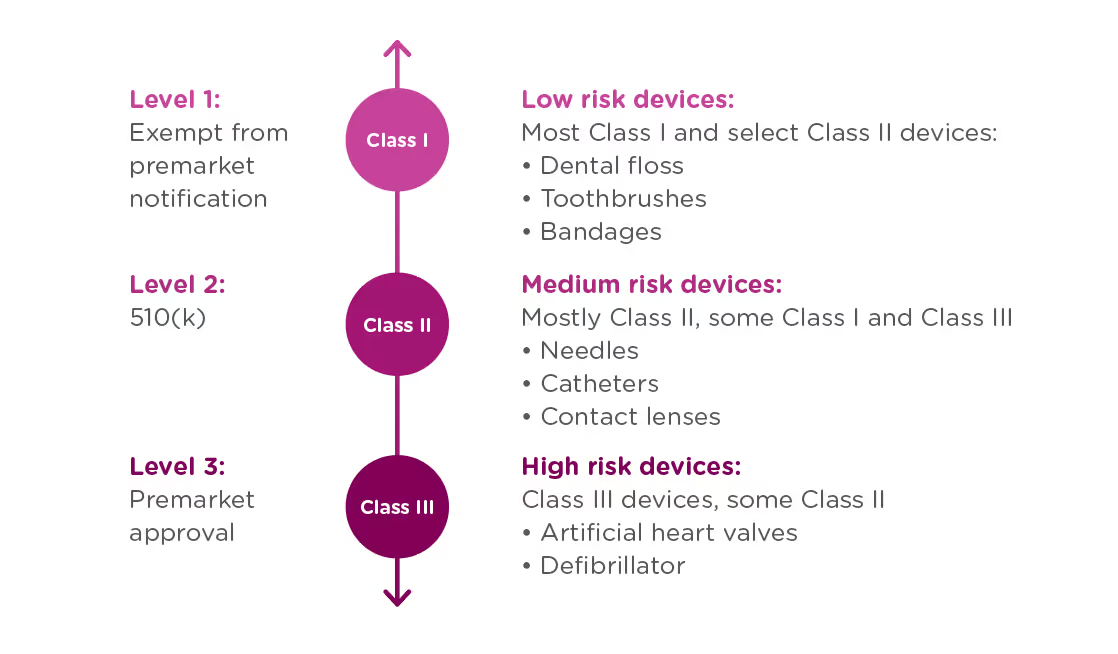
In order to achieve this balance of safety and efficiency, the FDA has three different levels of oversight depending on the risk level of the device: (1) exempt from premarket submission, (2) Premarket Notification, also known as 510(k), and (3) Premarket Approval (PMA).
When is a 510(k) required?
A 510(k) is required for medium risk devices that have a predicate on the market which can be used to demonstrate the safety and effectiveness of the new device. Meanwhile, a PMA is required for high-risk or novel devices which require a higher level of scrutiny to be confirmed safe and effective.
A 510(k) is not only required for new devices, but also for devices that have been modified in a way that could impact safety or effectiveness. This could include changes to the:
- Design
- Components
- Materials
- Chemical composition
- Energy source
- Manufacturing process
- Intended use
You must submit your 510(k) at least 90 days before marketing the device.
What Exactly is Substantial Equivalence?
Now that we know what a 510(k) is, let’s talk about the substantial equivalence standard. You’ll recall from the introduction that your 510(k) must show that the new (or modified) device is substantially equivalent to at least one other legally marketed device, called a predicate device. Substantial equivalence looks at the intended use and the technological characteristics of the two devices.
More specifically, you must show:
- that the new device has the same intended use as the predicate, and
- the differences between the two devices do not raise questions about the safety and effectiveness of the new device.
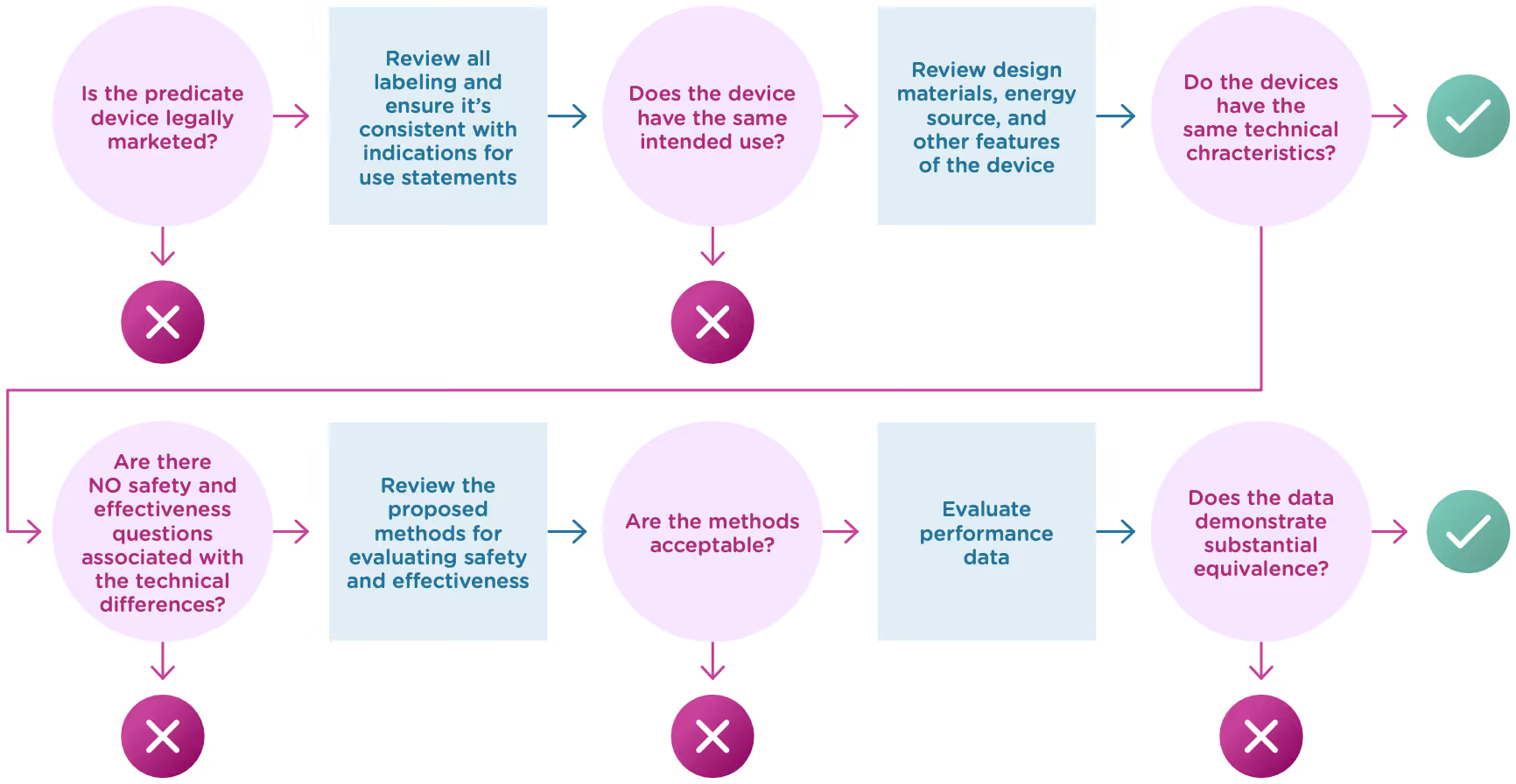
Now let’s take a closer look at intended use and technological characteristics.
Intended use
Intended use means the general purpose or function of the device. The FDA will look at your proposed labelling and your Indications of Use section of the 510(k) to determine the intended use of your device (this is covered in Chapter 2). Intended use includes:

Technological characteristics
Once the FDA has determined that a predicate device exists and that the new device and the predicate device have the same intended use, it will move on to compare the technological characteristics. Technological characteristics include:
- Materials
- Design
- Energy source
- Other device features
The two devices do not have to be identical, and in fact they almost never are. The key here is to demonstrate that any differences do not have a significant impact on safety or effectiveness. Here’s what to cover when you compare your device’s technological characteristics with that of the predicate device:
Overall description of the device design
- Engineering drawings or diagrams to explain the device and component parts.
- List of component parts and explanation of how each component contributes to the overall use and function of the device.
- Physical specifications: dimensions, weight, temperature, tolerances, etc.
Materials
- Detailed chemical formulation used in all materials of constructions (especially those that come into contact with a patient).
- Any additives, coatings, paint, or surface modifications.
- How materials have been processed and what state they’re in.
Energy Sources
- Use of batteries, electricity, etc.
Other technological features
- Software/hardware
- Features
- Density
- Porosity
- Degradation characteristics
- Nature of reagents
- Principle of the assay method
In deciding whether the differences in technological characteristics impact safety or effectiveness, the FDA will typically rely on descriptive information about the technological characteristics as well as non-clinical and clinical performance data.
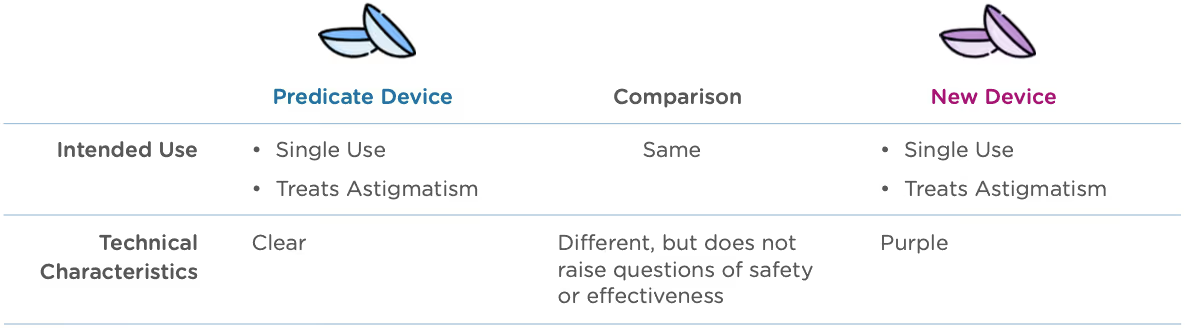
Let’s look at an example: A manufacturer submits a 510(k) for a new type of contact lens. Both the new device and the predicate device are indicated for daily wear for the treatment of astigmatism. The predicate device is only available in a clear lens, but the new device comes in a line of colors, including purple tinted lenses.
Who is responsible for submitting a 510(k)?
The following four types of organizations may be responsible for submitting a 510(k):
Manufacturers
- End-of-line device manufacturers who will be placing a device on the U.S. market.
- Note: Does not apply to component part manufacturers unless components will be marketed independently.
Specification developers
- Companies that develop the specifications for a finished device which has been manufactured elsewhere
Repackers or relabelers
- Required to submit a 510(k) if they significantly alter the labeling or condition of the device, including modification of manuals, changing the intended use, deleting or adding warnings, contraindications, sterilization status.
- Note: This is rare. The manufacturer, not the repackager or labeler, is typically responsible for the 510(k) submission.
Importers
- Importers that introduce a new device to the U.S. market may need to submit a 510(k), if it hasn’t already been submitted by the manufacturer.
Now that we’ve covered the basics, let’s explore what actually goes into your 510(k).
A Traditional 510(k) should contain all the following components in the list below. In some cases, a particular section may not apply to your device. When that happens, it’s a good idea to include the section anyway and just state “This section does not apply” or “N/A” under that heading.
To continue reading this eBook including a detailed walk-through of all the Traditional 510(k) components, submission requirements and timelines, and an overview of the other 510(k) forms including the Abbreviated 510(k) and the Special 510(k), please register to download the full version


The ultimate guide to the China UDI system and database
This article is an excerpt from The ultimate guide to the China NMPA UDI system and database ebook.
Table of Contents
- Overview
- UDI basics and benefits
- UDI format requirements and issuing entities
- UDI database and submission requirements
- Implementation of UDI and the UDI database in China
The current Chinese medical device regulatory regime kicked-off in 2014 with the Regulation on Supervision and Administration of Medical Devices. This core set of registration requirements, modeled after the United States and European Union systems, established a set of device classifications (class I, II, and III) based on risk and procedures for obtaining market clearance for each type of device.
Medical devices in China are regulated by the National Medical Products Administration (NMPA). Class I devices, such as clinical laboratory equipment or non-invasive skin dressings, require only notification to the NMPA for marketing authorization, and that authorization does not expire. Class II and III devices such as implantable devices or devices with a measuring function require full registration and a formal review before market clearance can be obtained.
These initial regulations have been expanded since their introduction, adding accelerated pathways to market for certain products in certain regions, easing acceptance of clinical data from overseas, and more specific roles and responsibilities for local agents of international manufacturers. In addition, in 2019, the regulations added a provision that medical devices carry a unique device identification (UDI). China’s UDI requirements are similar to those in the US and European Union. They establish specific device ID and labeling requirements, as well as a central, state-administered database of devices.
This eBook walks through the basics of medical device UDIs, the specifics of China’s implementation, and how MedTech companies who market their devices in China can prepare for the full rollout of these regulations in the coming years.
A UDI is a unique alphanumeric code that is designed to identify medical devices sold in a particular country/region from manufacturing, through distribution, to use by a patient. Like other aspects of the medical device regulatory regime, the UDI system in China follows the approach taken by the United States FDA and European Commission, and is based on the guidance from the International Medical Device Regulators Forum (IMDRF). Generally, UDI systems are designed to improve patient safety and optimize care by:
- Increasing the traceability of medical devices, including field safety corrective actions
- Providing an unambiguous identification method for medical devices throughout distribution and use
- Making adverse event reports more accessible
- Reducing medical errors by providing detailed information related to the device
- Simplifying medical device documentation and making it more consistent
There are three components to the UDI system in China:
- UDI code: The actual UDI code can be assigned by one of three (3) issuing agencies and contains information about the product, it’s expiration date, and the manufacturing batch/lot it’s associated with.
- UDI labeling: Put simply, medical devices must carry the UDI code on them. The regulations stipulate how devices and their packaging must be labeled for compliance.
- UDI database: In addition to labeling, all device UDIs must be submitted to a central database that is administered by the NMPA.
The following sections explore each of these components in more detail.
The UDI code
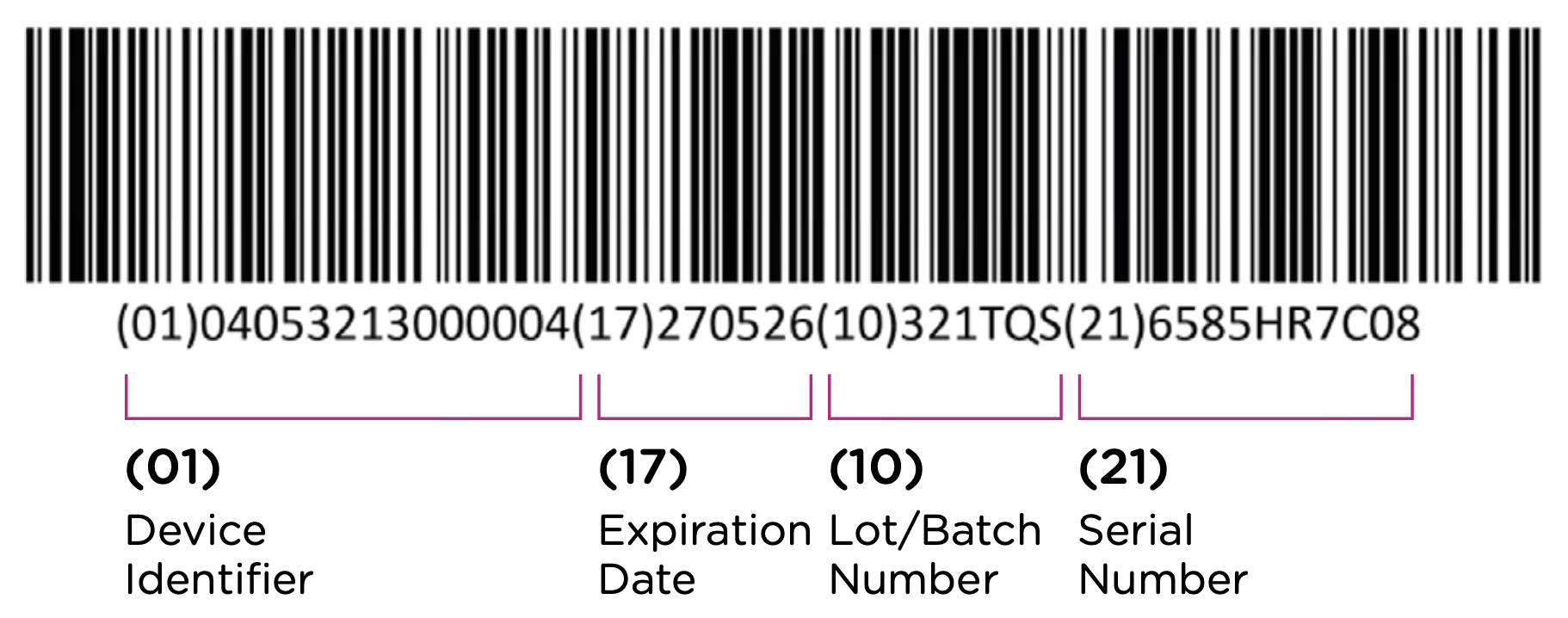
The first element of the UDI system is the code itself. The UDI code is the alphanumeric identifier that is associated with a specific medical device. UDI codes have two (2) elements to them, the UDI device identifier (UDI-DI) or static portion, and the UDI production identifier (UDI-PI) or dynamic portion. You can see the two components in the UDI diagram below:
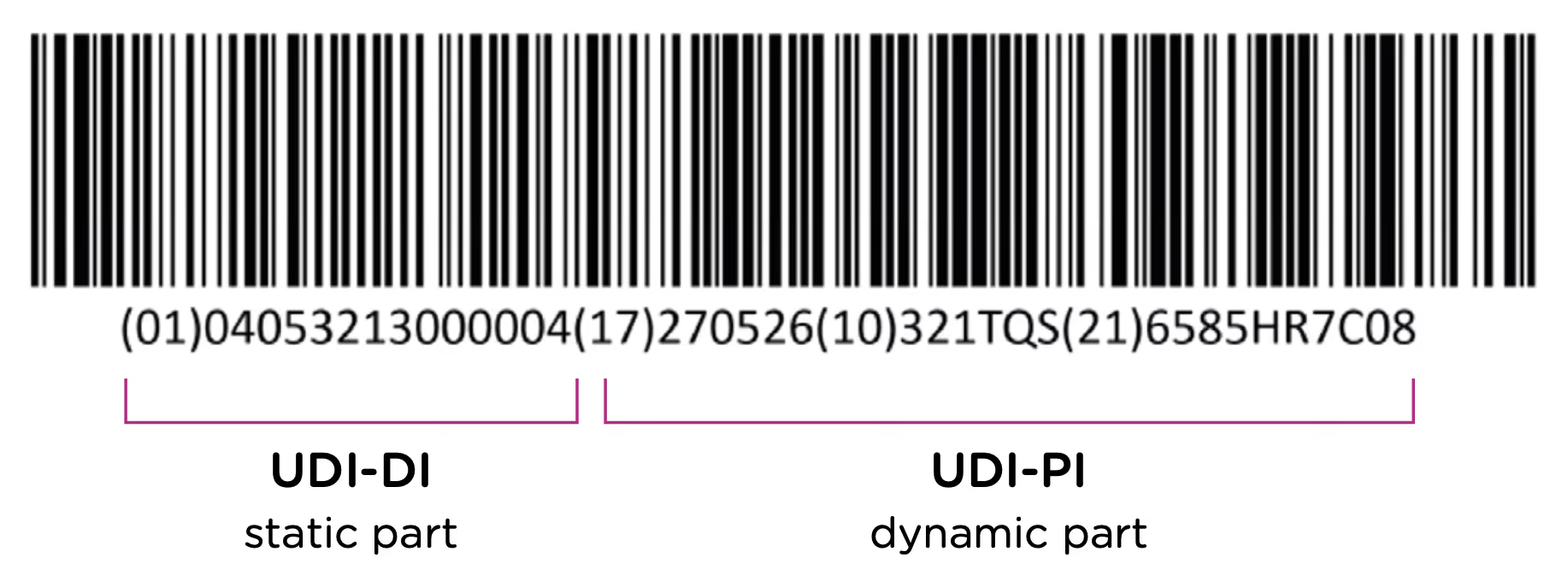
The UDI-DI contains information about the issuing entity—the organization that is authorized to assign UDI codes. In China, this can be one of three entities: GS1, an international barcode and electronic data interchange standards organization, and two domestic organizations: the Zhongguancun Industry & Information Research Institute (ZIIOT), and AliHealth. Additional details about the issuing agencies are covered in Chapter 2. In addition, the UDI-DI contains information about the manufacturer and the specific model or version of the device.
The UDI-PI contains information about the manufacturing and production of the device. This typically includes information about the lot or batch number in which the device was manufactured, the manufacturing date and expiration date for the device (if applicable), and the specific serial number for the device. Here you can see all of the components marked up using the same UDI example:
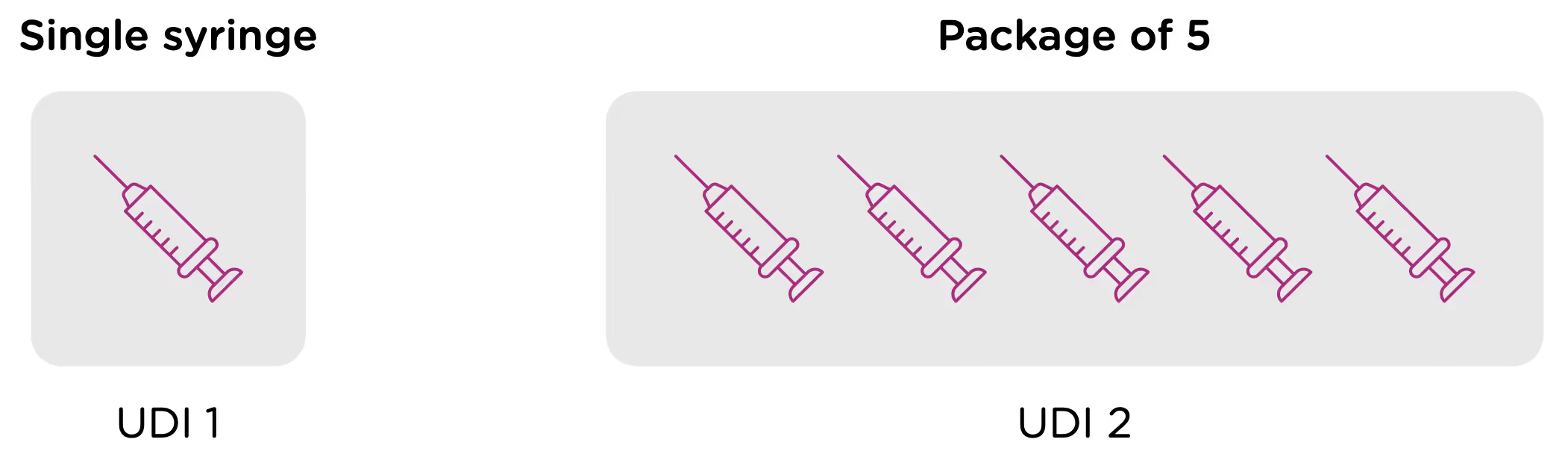
Note that each packaging permutation and level for a given device will need to be assigned its own UDI. So for example, let’s say that a company manufactures 5ml enteral (oral) syringes in two packaging options: 1 – packaged individually and 2 – packaged in a box of 5. Each packaging option would need its own UDI, despite the fact that the underlying product is the same.
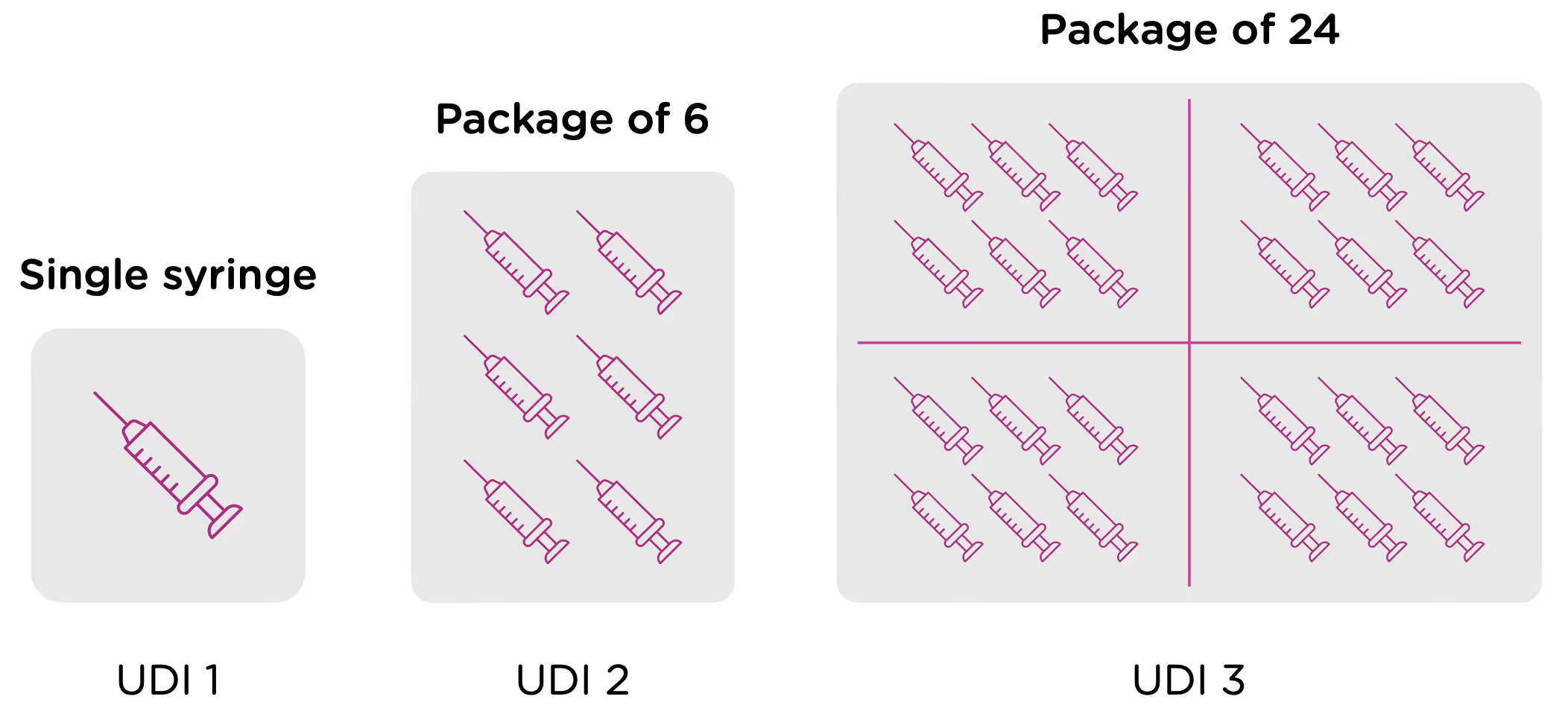
Now looking at packaging levels, let’s assume that the manufacturer packages the single syringe offering into boxes of 6, and again into larger containers of 24. Each of those packaging options needs its own UDI as well.
Labeling
In addition to obtaining UDI code for each device as outlined in the previous section, medical device manufacturers are required to ensure that devices are appropriately labeled with the assigned UDI. This label is called the UDI Carrier. The UDI is represented in two forms on the UDI Carrier: a machine-readable form and a human-readable form.
The machine-readable form or automatic identification data capture (AIDC) is a barcode or some other technology that can be used to automatically capture UDI information. The NMPA regulations support 3 types of machine-readable formats: 1-dimensional barcode, 2-dimensional barcode, and radio-frequency identification (RFID).
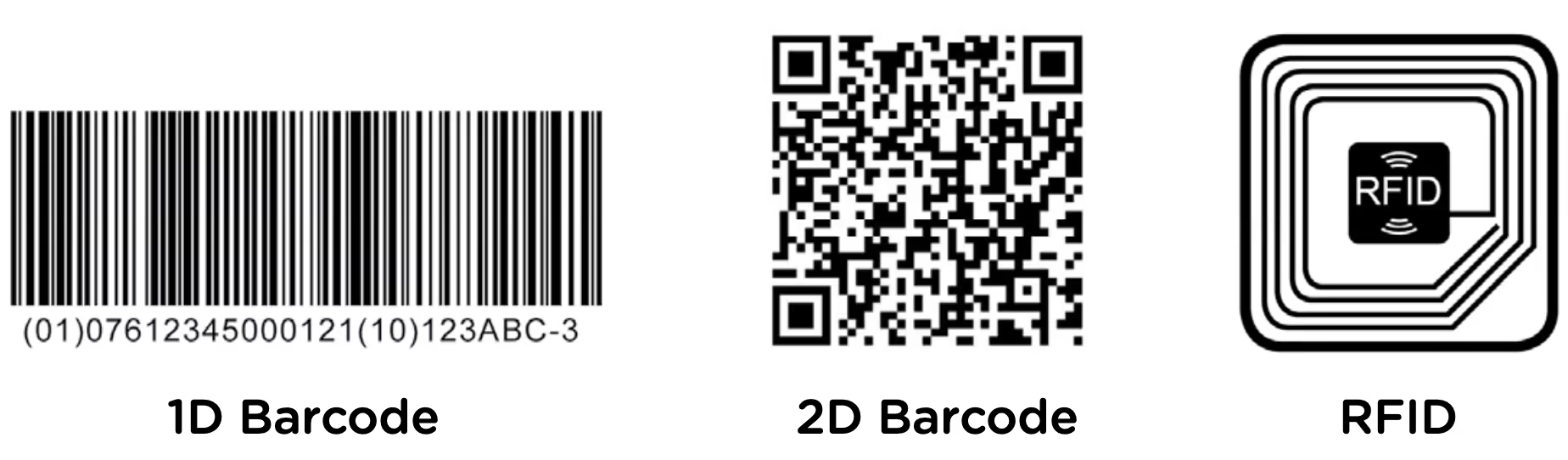
The regulations note that “use of advanced automatic identification and data collection technologies is encouraged”—prompting manufacturers to use more modern 2D and RFID machine-readable carriers where possible. Note, however, that if a device uses RFID, the UDI Carrier must also include the UDI in barcode format.
The human-readable form or human-readable interpretation (HRI) is the numeric or alphanumeric code for the UDI that can be read and manually entered into systems.
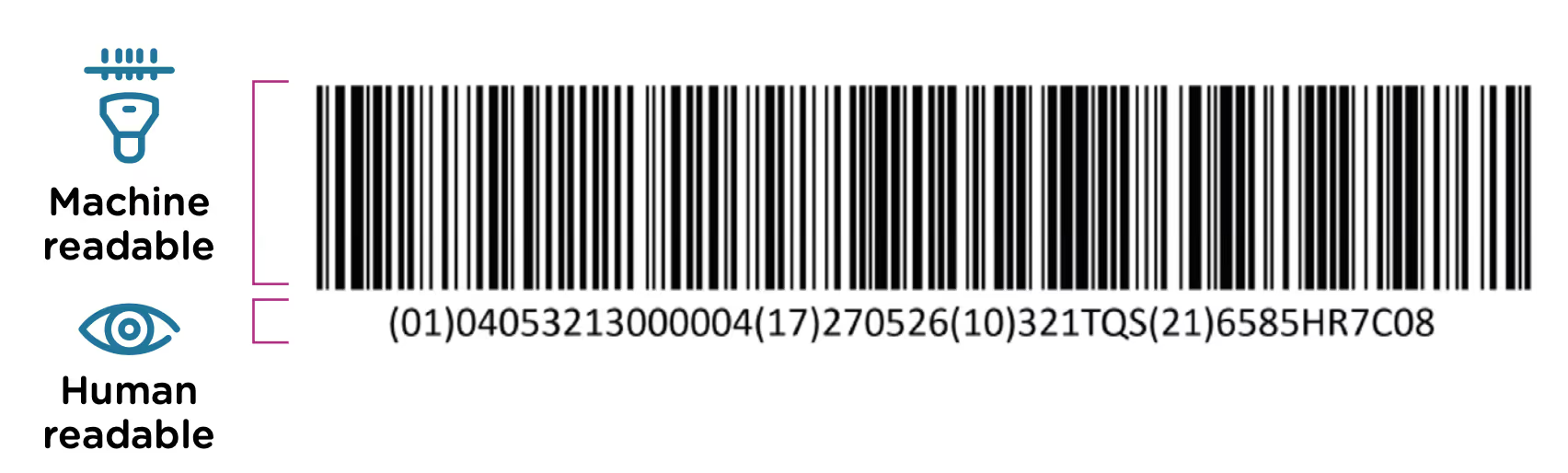
The UDI Carrier should be included on the device and on all levels of packaging. The UDI Carrier must be clear and readable during the operation and use of devices. If there isn’t room on the device for both the human and machine-readable forms of the UDI, then manufacturers should prioritize the machine-readable form.
UDI database
The third component of the NMPA UDI system is the UDI database. This is a centralized database of UDI and product information, administered by the NMPA. Manufacturers are required to submit UDI information into the database within 60 days after a product is approved (for sale in China) and before it is commercialized. The database contains a more detailed product record than what is included in the UDI itself, and it is the responsibility of the manufacturer (and/or their in-country representative) to submit the information correctly, and ensure that it’s kept up to date.
Chapter 3 of this eBook goes into detail about the specific fields and data requirements for UDI database submissions.
To continue reading this eBook including information about UDI format requirements and issuing entities, implementation timelines, and affected device types, please register to download the full version.

Announcing the Rimsys advisory board
Rimsys Regulatory Management Software, the leading Regulatory Information Management (RIM) platform designed specifically for the medical device industry, is proud to announce the creation of its prestigious advisory board.
By creating an advisory board with the most forward-thinking minds and preeminent talent in the medical device industry, Rimsys is now aligned and positioned to continue its growth and mission as the leading regulatory management software in the medical device industry.
The board members serve as strategic partners in the continued development and success of Rimsys, as a catalyst to achieving its short-term and long-term goals. The board is comprised of trusted thought leaders, known for being change agents in the industry and having the respect of their peers throughout their career and community.
"The management team could not be more pleased with the addition of these board members and involvement they have with the direction of our company. We are fortunate and thrilled to have such talented and experienced industry veterans and look forward to their many contributions,” said James Gianoutsos, Founder & President of Rimsys."
As advocates and ambassadors of Rimsys, the board supports the management team through strategic analysis, consultation, and providing professional expertise and guidance to help navigate and mitigate potential risks, discover opportunities, and define benchmarks for continued success and organizational growth.
"Rimsys is a very unique product in the marketplace, so it’s only fitting that we bring on such unique minds to the board. Their expertise and vision are exactly what is needed to help us improve our business, our technology and expand our product offerings,” said Brad Ryba, CTO of Rimsys."
The current advisory board members include:

John Speer
Jon Speer has over 20 years of experience in the medical device industry that includes quality management, product development, and project management at Creo Quality, Cook Inc., Theron Inc., and Maetrics LLC. Jon is experienced in managing multiple projects and taking medical device concepts through development, regulatory submission, and ultimately to market. Additionally, Jon is an expert in the design and implementation of FDA-compliant quality management systems and is an active contributor at MedCity News, Med Device Online, Quality Digest, QMed, and is the host of the #1 most downloaded podcast in the industry, The Global Medical Device Podcast. Jon currently serves as the Founder and VP QA/RA at Greenlight Guru, an eQMS that is specifically designed for the medical device industry.

Chris Ferguson
Chris Ferguson has over 15 years of global medical device quality and regulatory affairs experience managing class I, II, and III medical devices and consumer products for numerous world-class global organizations. Chris has successfully led global quality and regulatory projects and teams through FDA, ISO, consumer safety audits, and quality system remediation activities and has in-depth knowledge of the current regulatory landscape. Chris currently serves as Director of Quality Assurance for TransEnterix, Inc.

Bruce McKean
Bruce McKean has over 25 years of medical device industry experience as a regulatory professional specializing in quality and regulatory (Q&R) compliance, design controls, and Q&R related mergers and acquisitions. During his career, Bruce has focused on implementing and maintaining design controls, product submissions, quality management systems internal to his company and for newly acquired companies, corporate Q&R internal audit program, and performing Q&R due diligence audits on target companies. Most recently, Bruce has led a corporate-wide MDSAP compliance initiative and is focusing on the EU MDR implementation. Bruce currently serves as Director of Q&R Operations at Philips Healthcare.

Adam Price
Adam Price has over 15 years of medical device industry experience as a quality assurance and regulatory affairs professional. Adam is currently focused on the development of strategies and solutions to establish and maintain compliance in today’s fast-paced regulatory environment to enable businesses to meet the demands of the global market. Adam is cognizant of dynamic and complex market requirements and the need for effective tools and solutions to allow businesses to maintain continued regulatory compliance. Adam currently serves as Head of Post-market Surveillance at Philips Healthcare.

The 510(k) application: if content is king, then communication is queen
Often, the first thing we hear from a consultant or a medical device company regarding an FDA 510(k) premarket notification is that it was delayed because the FDA reviewer did not understand something simple within the application, or completely missed it.
What is wrong with the reviewer? How could they have missed something so simple? I couldn’t have been any clearer!
Sound familiar?
FDA is overworked, under-resourced, and will most likely miss something simple in your file upon reviewing.
As the specification developer, you know the design and history of the product better than anyone. You are providing that entire history in a formal application for review, and hopefully, clearance. A basic understanding of the technology is a must; however, think about the situation from the FDA reviewers’ point of view. 510(k) applications are inherently technical and sometimes need a brief discussion with the FDA reviewer for clarification or a general overview of your device.
Starting this dialog earlier is important for a smooth path to clearance. Part of this process involves requesting a Pre-Submission (“Pre-Sub”). Pre-Subs are a type of feedback that is part of FDA’s Q-Submission program.
Pre-Subs
Pre-Subs are a formal written request from an applicant for feedback from FDA to be provided in the form of a formal written response or a meeting (in-person or teleconference) in which the feedback is documented in meeting minutes. A Pre-Sub provides the opportunity for a submitter to obtain FDA feedback prior to intended submission of a premarket submission (i.e., IDE, PMA, HDE, De Novo request, 510(k), Dual, BLA, IND) or Accessory Classification Request, among others.
Pre-Subs are entirely voluntary on the part of the applicant. However, early interaction with FDA and careful consideration of FDA’s feedback may improve the quality of subsequent submissions, shorten total review times, and facilitate the development process for new devices.
Pre-Subs provide FDA reviewers with an introduction to you and your device rather than just having a 510(k) application dumped on their desk. FDA reviewers appreciate Pre-subs because they can get a sense of when they should anticipate filings and can plan their workloads accordingly.
FDA reviewers, like all of us, only have a certain amount of time during the day. If they are unable to find information easily or do not properly understand something, then they may state that the relevant information is missing from the application or needs further clarification. This kicks the 510(k) application back to you and stops the review clock. That is directly on the industry submitter, not the FDA reviewer.
The bottom line
FDA reviewers are people too. This is an obvious but often overlooked point to make. Sometimes they miss simple (and sometimes seemingly apparent) information. They make mistakes. The last thing you want to do is start yelling or pointing fingers. After all, you don’t want to burn any bridges as you will most likely deal with the same FDA reviewer upon subsequent submissions for similar products. Always be timely, concise, straightforward and respectful.
At the end of the day, keep in mind that your FDA reviewer isn’t as familiar with your medical device as you are. You need to help them understand items that are unclear, and the only way to do that is through building the communication channel early and having constructive conversations.
Did you know Rimsys Regulatory Management Software will keep track of all communications, notes, decisions, and tasks associated with your 510(k) application and other international regulatory submissions? Find out more now with a free demo and we will show you the power of the only regulatory information management (RIM) system platform designed specifically for the medical device industry.

Introducing government submission templates (i.e. 510k, STED, CSDT) and more!
Rimsys released a major revision on Dec. 3, 2018 that included adding registration workflows, registration owners, Kanban boards, new registration dates (e.g. anticipated approvals dates) and registration lifecycle stages.
Rimsys has been working aggressively over the last month to finish up the final touches on our next release, and we are excited to tell you that it has been officially released! These new features will benefit any size of an organization and continues our pathway to better serving the regulatory affairs professionals in the medical device industry.
Here are a few of our features released:
- Document templates – Depending on where you are registering your product, you can now choose or create your own document template that your team can follow to keep you compliant, better organized, and standardize your regulatory process. A few of our templates include: Summary of Technical Documentation (STED) for IVD and non-IVD Medical Devices, ASEAN Common Submission Dossier Template (CSDT), 510k Template, and more!
- Multi-product registrations – You can choose 1 or 1000 products (at the part number level) to register simultaneously into one market.
- Bulk search & replace for essential principles – We have been working with a few of our customers to get this functionality rolled out by the beginning of January. You now have the ability to search / replace / or remove a standard or a document throughout multiple essential principle tables simultaneously. Let’s say you are managing 10 (or even 500) essential requirements checklists…with a few clicks of a button, you can search, find and replace 1 (or all) standards or documents in EVERY table! If you have ever managed an essential requirements checklist before, we can’t stress enough of how HUGE of a time saver this is for you and your team!
- Embedded documents in essential principles – We now automatically embed your objective evidence directly into the Essential Principles PDF record. This means that when you export your essential principles as a PDF, every single document that is linked to it will be embedded directly into the searchable PDF. You never have to go looking for documents again!
- Dashboard updates – Added key metrics so your team can all be on the same page
- Expanded reporting capabilities – Added the ability to drill-down into key metrics
With this release, Rimsys will be better positioned to cater to organizations of all sizes. We have even more features and modules coming out in the coming months that will further enhance the benefit you receive from using Rimsys.
What’s next?
Rimsys has been working hard to be the single source of truth of all things regulatory related for medical devices. One of the most frequently requested features from our customers is the ability to bring regulatory updates on regulations, laws and guidance documents directly into Rimsys. We are happy to report that this feature has been in development for quite some time and we will be releasing in the next couple of months.

MDSAP device marketing authorization and facility registration
What is the medical device single audit program (MDSAP)?
The International Medical Device Regulators Forum (IMDRF) recognized that a global approach to auditing and monitoring the manufacturing of medical devices could improve their safety and oversight on an international scale. This created the Medical Device Single Audit Program (MDSAP) and allows a recognized Auditing Organization to conduct a single regulatory audit of a medical device manufacturer that satisfies the relevant requirements of the regulatory authorities participating in the program.
To date, the MDSAP participating countries include:
- Australia (Therapeutic Goods Administration – TGA)
- Bazil (Agência Nacional de Vigilância Sanitária)
- Canada (Health Canada)
- Japan (Japanese Pharmaceuticals and Medical Devices Agency)
- United States (FDA)
The World Health Organization (WHO) Prequalification of In Vitro Diagnostics (IVDs) Programme and the European Union (EU) are Official Observers, which means they are waiting for the results of the pilot MDSAP program to determine if it’s worth their while to sign on as an official partner.
When does MDSAP come into effect?
Starting January 1, 2019, if you’re selling medical devices into Canada, it’s not optional and you must be certified to MDSAP, or at the very least, show evidence that you are in the process of complying.
As part of the MDSAP auditing program, there are seven chapters an auditor must cover. One of those chapters is specific to marketing authorization and facility registration, which also touches on two other chapters, management and design development. An auditor will be specifically looking for the following:
- Have you complied with requirements to register and/or license your device facility;
- Did you submit device listing information;
- Did you obtain device marketing authorization;
- Have you arranged for assessment of changes and obtained marketing authorization for changes to devices or the quality management system which require an amendment to existing marketing authorization
You must have that information organized in a meaningful way that you can get to it quickly and show, objectively, that you fulfilled the requirements of MDSAP and all of the country regulatory requirements that fall under MDSAP. That also goes hand-in-hand with ISO 13485:2016 where you need a controlled release of products into the appropriate jurisdiction. If you’re trying to be a global leader or a global company, for that matter, in this day and age, you need to have a solid system in place to manage those marketing authorizations worldwide.
Controlled release of product
If you are selling out of the United States, you must comply with the laws of each importing country. That simply means, no matter where you sell outside of the United States, you must meet the importing country’s requirements for marketing authorization. Your regulatory team and business need to be on point by having a robust regulatory system in place that upon product release, you’re meeting those specific requirements. You must have a mechanism in place to ensure that you don’t release product prior to it being properly registered.
That mechanism starts during product realization. Sales, marketing, customer service, engineering, operations, and regulatory teams must all be on the same page. Often times, regulatory is perceived as the bottleneck to product release. However, this is a misconception and is primarily driven by poor planning during the design and development process.
Auditing to MDSAP
Auditors are looking for the standardized process for controlling the release of the product and ensuring that the process has been adequately established and implemented within your facility. MDSAP has a very rigid auditing process to ensure the proper market authorizations have been obtained and facility registrations have occurred.
When your company is audited, an auditor will request records from product outside of the MDSAP participating countries due to the broad jurisdiction of US and international regulations. If the auditor finds issues with those products, they can draw that parallel to determine that your company doesn’t have a controlled product release process and you need to investigate to ensure there isn’t a systemic issue. That means an audit observation and a corrective and preventive action (CAPA) plan need to be established to rectify the issue(s).
What does this mean for medical device manufacturers?
A regulatory professional’s job is worldwide nowadays, which means it is a lot of responsibility, burden and business risk that are on their shoulders. Do you really want all of that being managed by excel files, outlook reminders, and disjointed processes? It must be a fundamental, standardized process, ingrained into your quality management system, that you need in place in order to NOT run into any compliance issues. Your organization must have a standardized process to ensure that your company is releasing good (and approved) product into the market while maintaining any changes to that product (and registration) while it’s in that market.
The requirement is not only that you get the marketing authorization, but you stay compliant when you’re already in that market. That means you must constantly be monitoring for expiring registrations, any type of design changes with your product, and how they affect your marketing authorizations within those countries.
From a quality management system standpoint, you need a good change control process in place that ties directly to your regulatory team. If you don’t have a good regulatory process now, you’re not going to have one later. It’s going to be too late, and the amount of information that your regulatory team must handle today is only going to increase. That’s why you must develop those systems now.
To learn more about the MDSAP, markets where it’s applicable, pros and cons of using MDSAP vs Regulatory Authority inspections, and audit sequence and grading, download our Ultimate Guide to MDSAP.

Top 6 benefits of a regulatory information management (RIM) system for medical devices
The medical device and in-vitro diagnostic medical device industry are in dire need of a robust, practical and easy to use regulatory information management (RIM) system. Without a unified and collaborative system, serious consequences to your business can occur, including an increased risk of non-compliance, increased costs as well as a possible significant reduction in a product’s revenue potential.
1. Revenue impact
Missing registration dates, slow-to-market losses, and long-term, cascading impacts such as loss of customer loyalty have an immediate impact to market capitalization. Moreover, improper release of product due to lack of visibility to regulatory statuses can cause fines and loss of credibility with authorities, which can result in increased scrutiny.
2. Regulatory compliance
Compliant product releases are required in the medical device industry. Automation that creates safeguards to prevent unintentional release of products into markets is a must. Regulators from different markets are working together to identify instances of non-compliance as well as misalignment of information in submissions and other communications. More effective control of the submission, enabled by a unified platform, can lead to a leaner, higher quality submission and a reduced regulatory burden.
3. Faster time to market
Better planning and tracking in a unified system can monitor process metrics, milestones, and automatically informing submissions plan timelines with actual performance. A unified solution connects planning to execution, allowing improved, real-time process monitoring. Teams can quickly spot constraints and take action, allowing the product to get through your process faster.
4. Efficiency and collaboration
Regulatory processes touch multiple functional areas. Regulatory functions have been piecing together disparate systems to achieve marginal improvement. This landscape inhibits the accurate and timely transfer of data and disruption in cross-functional workflow.
5. Efficiency and collaboration
Employee turnover on regulatory teams is linked to the stress and increases greatly if team members consider processes to be inefficient or wasteful. Being able to perform one’s job efficiently and the perception of being part of a high-performing organization contributes to employee satisfaction and retention.
6. Insurance policy
Having a fail-safe in place now for when (not if) your top talent leaves prevent the loss of company and product specific tribal knowledge. Retraining a new employee without the subject matter expert can cause delays and wasted time. A unified system keeps all information within the company.

Introducing project management and essential principle templates
Directly on the heels of our new User Interface (UI) released at the end of September and debuting at the RAPS Regulatory Convergence in October, we are proud to announce another HUGE release.
Project management (for large and small teams)
Properly managing registrations across the world with dozens of stakeholders trying to collaborate on critical information is challenging enough, so we just made it easier for enterprise and large teams to manage everything.
The project management features were frequently requested and will set Rimsys up for further development of Key Performance Indicators (KPIs) to monitor the efficiency of your team and the registration process.
It will also allow Rimsys to further expand reporting capabilities and dashboard metrics so you can easily track and analyze data specific to your team, registrations, products, and countries.
- Registration owner - Assign an owner so you know who is responsible for each registration
- Anticipated approval date - Identify an anticipated approval so you can forecast product releases with other departments
- Registration start date - Automatically creates the registration start date so you can monitor exactly how long a registration takes from start to finish.
- Registration lifecycle stages - Whether you are in the discovery, planning, execution or submission stage of the registration process, you can now keep track with your own configurable buckets.
- Kanban boards - Visually see your registrations in each lifecycle stage and transition them into new stages by a simple drag n’ drop interface.
Essential principles (expansion of templates)
We always had a grander plan in mind. Rimsys was originally set up to include the new EU Medical Device Regulation (MDR) 2017/745 Annex I General Safety and Performance Requirements (GSPR) but now supports Essential Principles Templates that include:
- IVDR 2017/746EU IVDR GSPR
- Australian (TGA) Essential Principles
- Japan (PMDA) Essential Principles
- GHTF/SG1/N68:2012 IMDRF Essential Principles
- Directive 2006/42/EC – Machinery Directive
- and more to come!
The essential principles expansion complies with country entrance requirements and will set Rimsys up for further development of correlation tables. What are correlation tables you ask? Think of this….you create the general safety and performance requirements table for the EU MDR, then with a click of a button, you create the essential principle tables that meet the requirements for all other countries. More to come…
What’s next?
Next month, we will be making a few more major announcements that will bring you new and even better features that will drastically create more value to your company and team. We can’t wait to share the news with you…stay tuned!