


The ultimate guide to the medical device single audit program (MDSAP)
This article is an excerpt from The ultimate guide to the medical device single audit program (MDSAP) ebook.
Table of contents
- What is MDSAP?
- History of MDSAP
- Who is responsible for the MDSAP?
- How does an MDSAP audit work?
- Audit sequence
- You got a nonconformity – now what?
- What does an MDSAP audit cost?
- Why choose the MDSAP certification process?
- Potential disadvantages of the MDSAP
- Ready to participate? – Here’s how to get started
- Completing a successful MDSAP audit
The Medical Device Single Audit Program (MDSAP) was designed and developed to allow a single audit of a medical device manufacturer to be applied to all country markets whose regulatory authorities are members of the program. The MDSAP provides efficient and thorough coverage of the standard requirements for medical device manufacturer quality management systems, and requirements for regulatory purposes (ISO 13485:2016). In addition, there are specific requirements of each medical device regulatory authority participating in the MDSAP that must be met:
- Conformity Assessment Procedures of the Australian Therapeutic Goods (Medical Devices) Regulations (TG(MD)R Sch3)
- Brazilian Good Manufacturing Practices (RDC ANVISA 16)
- Medical Device Regulations of Health Canada (ISO 13485:2003)
- Japan Ordinance on Standards for Manufacturing Control and Quality Control of Medical Devices and In Vitro Diagnostic Reagents (MHLW Ministerial Ordinance No 169)
- Quality System Regulation (21 CFR Part 820), and specific requirements of medical device regulatory authorities participating in the MDSAP program.
This means that a report from a single MDSAP audit of a medical device manufacturer would be accepted as a substitute for routine inspections by all the member Regulatory Authorities (RAs) across the world. There are currently five participating Regulatory Authorities (RA) representing the following countries: Australia, Brazil, Canada, Japan and the USA.

In April, 2021, the RAs released an “Audit Approach” document (MDSAP AU P0002.006) that combines the formerly separate MDSAP Audit Model and Process Companion documents into a single guidance document. It includes guidance for assessing the conformity of each process and includes an audit sequence, instructions for auditing each specific process, and identifies links that highlight the interactions between the processes.
In March 2012 the US FDA announced that they had approved a final pilot guidance document “Guidance for Industry, Third Parties and Food and Drug Administration Staff: Medical Device ISO 13485:2003 Voluntary Audit Report Submission Pilot Program.” This allowed the owner or operator of a medical device manufacturing facility to be removed from FDA’s routine inspection work plan for 1 year upon completing a ISO 13485:2003 audit. This guidance document went into effect in June 2012, and was intended as an interim measure while a single audit program was being developed.
This pilot program was not very successful and few companies signed up because they did not see any advantage in participating. The manufacturer had to pay for a third party to inspect their facilities, generate a report, and share the inspection results back to the FDA. Many companies were reluctant to contract “someone else” to perform their inspection when they could easily wait for the FDA to conduct an inspection for free.
During its inaugural meeting in Singapore in 2012, the International Medical Device Regulators Forum (IMDRF) appointed a working group to develop a set of documents for a harmonized third-party auditor system. Hence, the “Medical Device Single Audit Program” (MDSAP) was formed. The concept was similar to the FDA’s original idea of creating a third-party auditor to help reduce their workload of performing regulatory audits of medical device manufacturers’ quality management systems. This new approach would consist of a single audit that would review regulatory QMS compliance, conducted by a third-party, who would later be called an Auditing Organization (AO).
From January 2014 to December 2016, five countries participated in a Medical Device Single Audit Program Pilot. In June 2017, a report was generated summarizing the outcomes of prospective “proof- of-concept” criteria established to confirm the success of the program. The outcomes are documented in the final MDSAP Pilot Report and recommended that the program become fully active and open to any manufacturer who requested this type of audit.
The governing body of the MDSAP is the Regulatory Authority Council (RAC), which is composed of two senior managers (and a few other staff members) from each participating RA. They are responsible for executive planning, strategic priorities, setting policy, and making decisions on behalf of the MDSAP International Consortium. The RAC also reviews and approves documents, procedures, work instructions, and more. The mission of the MDSAP International Consortium is to jointly leverage regulatory resources to manage an efficient, effective, and sustainable single audit program focused on the oversight of medical device manufacturers on a global scale.
Other international partners that are involved in the MDSAP include:
MDSAP Observers:
- European Union (EU)
- United Kingdom’s Medicines and Healthcare products Regulatory Agency (MHRA)
- The World Health Organization (WHO) Prequalification of In Vitro Diagnostics (IVDs) Program
MDSAP Affiliate Members:
- Argentina’s National Administration of Drugs, Foods and Medical Devices (ANMAT)
- Republic of Korea’s Ministry of Food and Drug Safety
- Singapore’s Health Sciences Authority (HSA)
The observers and affiliate members are not the same as the participating member RA’s. The observers simply observe and/or contribute to RAC activities. Affiliate members, on the other hand, are interested in engaging in the MDSAP program and are subject to certain rules. They are only given access to a certain level of information about the manufacturers, audit dates, and information in audit reports.
They are also invited to attend sessions that are open to members, observers, and affiliates only.
Audits can also be conducted by MDSAP participating RAs at any time and for various reasons including:
- "For Cause" due to information obtained by the regulatory authority
- as a follow up to findings from a previous audit
- to confirm the effective implementation of the MDSAP requirements
The purpose of audits conducted by the RAs is to ensure appropriate oversight of the AOs MDSAP auditing activities. The AOs are appointed by the RAs and a list of the currently approved AO’s is published on the FDA website. Most AOs offer a broad range of management system certification services, beyond just medical devices. Manufacturers should verify that prospective AOs are clearly trained and perform MDSAP audits of medical devices.
AOs have the final word as to whether a manufacturer has met the requirements for the MDSAP during the execution of the audit and generation of the associated reports summarizing the results. MSDAP RAC participating RAs have the final decision regarding all development, implementation, maintenance, and expansion activities associated with the program.
Although an unannounced visit by an AO is rare, it can happen in circumstances where high-grade nonconformities have been detected.
To continue reading this eBook including a detailed look at the MDSAP audit process and grading, pros and cons of the approach, and how to get started please register to download the full version.
The beginner's guide to the FDA 510(k)
This article is an excerpt from The beginner's guide to the 510(k) ebook.
Table of Contents
- Introduction
- 510(k) basics
- Contents of a Traditional 510(k)
- 510(k) submission and timelines
- Other 510(k) forms
Congratulations! You have successfully developed a new medical device. Now you need to take it to market. In the United States, this often means submitting a 510(k). A 510(k) is a structured package of information about your device and its performance and safety that you submit to the Food and Drug Administration (FDA) for “clearance” before you can sell your device in the U.S. In order to receive clearance from the FDA, your 510(k) will need to demonstrate that your medical device is substantially equivalent to another legally marketed device (called a predicate device). The substantial equivalence approval process is a simple equation that looks something like this:

The 510(k) is generally the most efficient route to market clearance in the U.S. because you show your device is safe and effective based on this substantial equivalence standard, instead of needing to present more extensive clinical trial data.
There are three types of 510(k): Traditional, Abbreviated, and Special. This eBook will begin with a general overview of the 510(k) process, including its purpose and benefits. Next, we will explore the Traditional 510(k) and the sections and components required in depth. Finally, we will look at the Special and Abbreviated 510(k).
FDA: background and device oversight
Before we explain what a 510(k) is let’s first talk generally about the FDA and device oversight. The FDA is the U.S. governmental agency responsible for overseeing medical devices, drugs, food, and tobacco products. When it comes to medical devices, the FDA’s mission is to “protect the public health by ensuring the safety, efficacy, and security of…medical devices.” At the same time, the FDA also has an interest in “advancing public health by helping to speed innovations.” In other words, the FDA’s goal is to make sure devices are safe and effective for public use, while also ensuring that devices have a quick and efficient path to market.
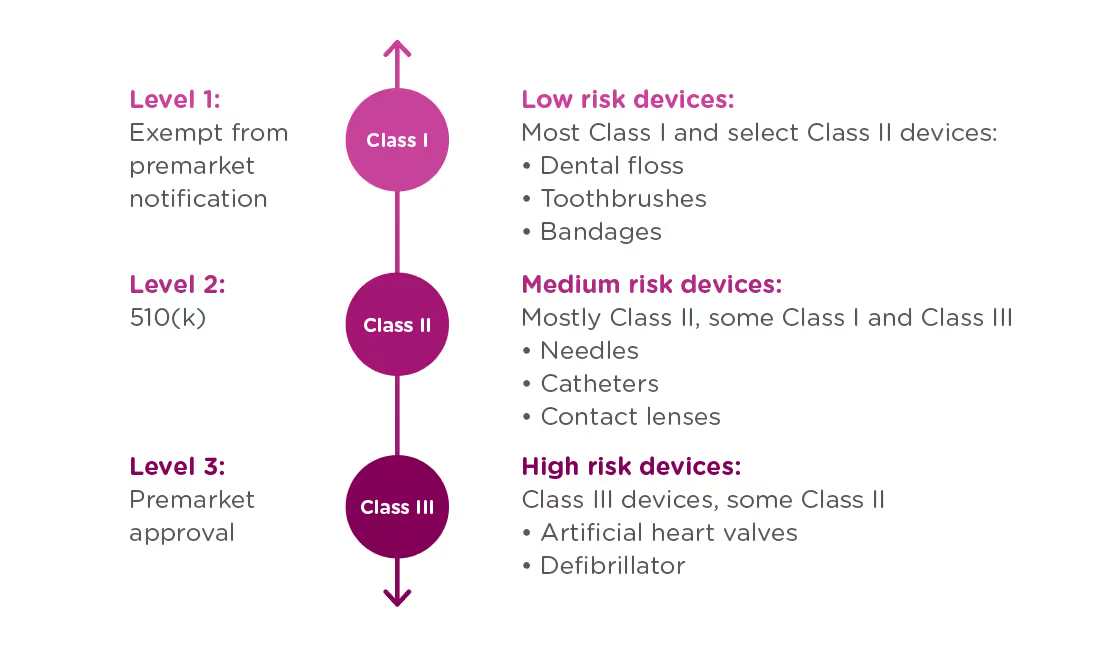
In order to achieve this balance of safety and efficiency, the FDA has three different levels of oversight depending on the risk level of the device: (1) exempt from premarket submission, (2) Premarket Notification, also known as 510(k), and (3) Premarket Approval (PMA).
When is a 510(k) required?
A 510(k) is required for medium risk devices that have a predicate on the market which can be used to demonstrate the safety and effectiveness of the new device. Meanwhile, a PMA is required for high-risk or novel devices which require a higher level of scrutiny to be confirmed safe and effective.
A 510(k) is not only required for new devices, but also for devices that have been modified in a way that could impact safety or effectiveness. This could include changes to the:
- Design
- Components
- Materials
- Chemical composition
- Energy source
- Manufacturing process
- Intended use
You must submit your 510(k) at least 90 days before marketing the device.
What Exactly is Substantial Equivalence?
Now that we know what a 510(k) is, let’s talk about the substantial equivalence standard. You’ll recall from the introduction that your 510(k) must show that the new (or modified) device is substantially equivalent to at least one other legally marketed device, called a predicate device. Substantial equivalence looks at the intended use and the technological characteristics of the two devices.
More specifically, you must show:
- that the new device has the same intended use as the predicate, and
- the differences between the two devices do not raise questions about the safety and effectiveness of the new device.
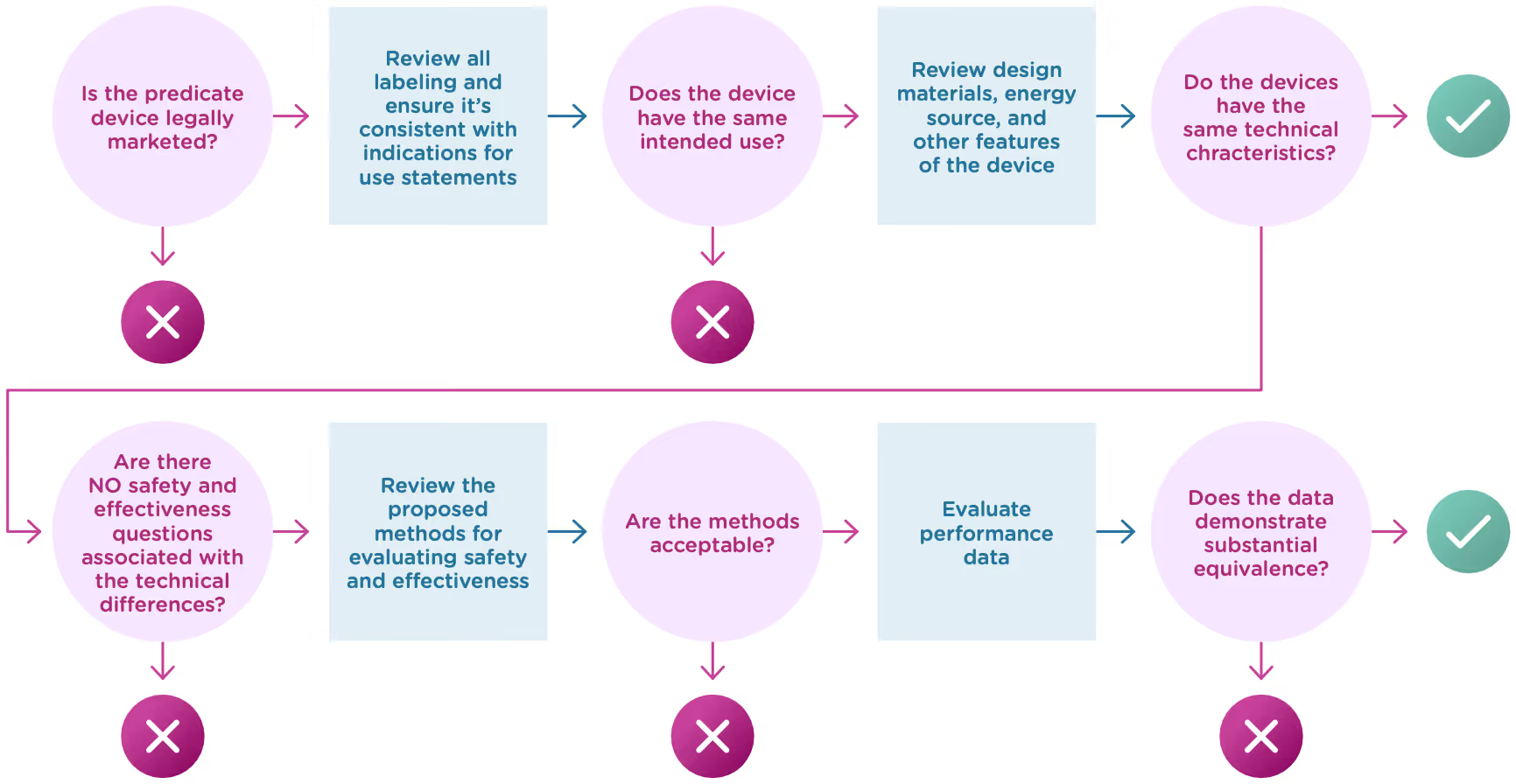
Now let’s take a closer look at intended use and technological characteristics.
Intended use
Intended use means the general purpose or function of the device. The FDA will look at your proposed labelling and your Indications of Use section of the 510(k) to determine the intended use of your device (this is covered in Chapter 2). Intended use includes:

Technological characteristics
Once the FDA has determined that a predicate device exists and that the new device and the predicate device have the same intended use, it will move on to compare the technological characteristics. Technological characteristics include:
- Materials
- Design
- Energy source
- Other device features
The two devices do not have to be identical, and in fact they almost never are. The key here is to demonstrate that any differences do not have a significant impact on safety or effectiveness. Here’s what to cover when you compare your device’s technological characteristics with that of the predicate device:
Overall description of the device design
- Engineering drawings or diagrams to explain the device and component parts.
- List of component parts and explanation of how each component contributes to the overall use and function of the device.
- Physical specifications: dimensions, weight, temperature, tolerances, etc.
Materials
- Detailed chemical formulation used in all materials of constructions (especially those that come into contact with a patient).
- Any additives, coatings, paint, or surface modifications.
- How materials have been processed and what state they’re in.
Energy Sources
- Use of batteries, electricity, etc.
Other technological features
- Software/hardware
- Features
- Density
- Porosity
- Degradation characteristics
- Nature of reagents
- Principle of the assay method
In deciding whether the differences in technological characteristics impact safety or effectiveness, the FDA will typically rely on descriptive information about the technological characteristics as well as non-clinical and clinical performance data.
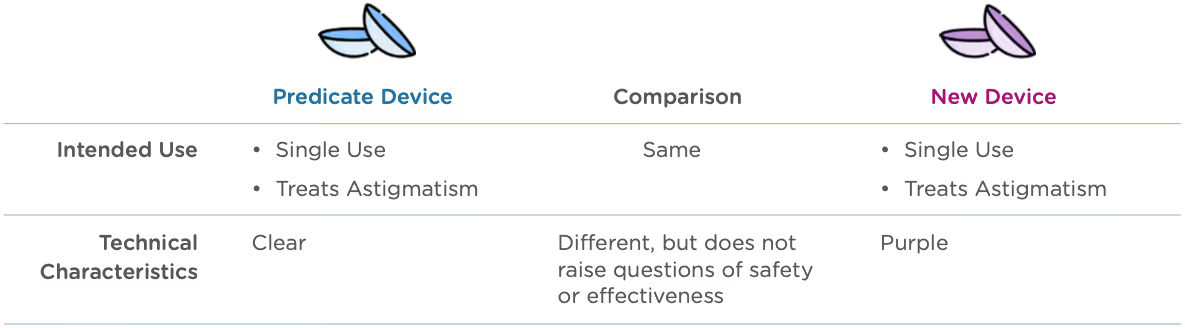
Let’s look at an example: A manufacturer submits a 510(k) for a new type of contact lens. Both the new device and the predicate device are indicated for daily wear for the treatment of astigmatism. The predicate device is only available in a clear lens, but the new device comes in a line of colors, including purple tinted lenses.
Who is responsible for submitting a 510(k)?
The following four types of organizations may be responsible for submitting a 510(k):
Manufacturers
- End-of-line device manufacturers who will be placing a device on the U.S. market.
- Note: Does not apply to component part manufacturers unless components will be marketed independently.
Specification developers
- Companies that develop the specifications for a finished device which has been manufactured elsewhere
Repackers or relabelers
- Required to submit a 510(k) if they significantly alter the labeling or condition of the device, including modification of manuals, changing the intended use, deleting or adding warnings, contraindications, sterilization status.
- Note: This is rare. The manufacturer, not the repackager or labeler, is typically responsible for the 510(k) submission.
Importers
- Importers that introduce a new device to the U.S. market may need to submit a 510(k), if it hasn’t already been submitted by the manufacturer.
Now that we’ve covered the basics, let’s explore what actually goes into your 510(k).
A Traditional 510(k) should contain all the following components in the list below. In some cases, a particular section may not apply to your device. When that happens, it’s a good idea to include the section anyway and just state “This section does not apply” or “N/A” under that heading.
To continue reading this eBook including a detailed walk-through of all the Traditional 510(k) components, submission requirements and timelines, and an overview of the other 510(k) forms including the Abbreviated 510(k) and the Special 510(k), please register to download the full version


The ultimate guide to the China UDI system and database
This article is an excerpt from The ultimate guide to the China NMPA UDI system and database ebook.
Table of Contents
- Overview
- UDI basics and benefits
- UDI format requirements and issuing entities
- UDI database and submission requirements
- Implementation of UDI and the UDI database in China
The current Chinese medical device regulatory regime kicked-off in 2014 with the Regulation on Supervision and Administration of Medical Devices. This core set of registration requirements, modeled after the United States and European Union systems, established a set of device classifications (class I, II, and III) based on risk and procedures for obtaining market clearance for each type of device.
Medical devices in China are regulated by the National Medical Products Administration (NMPA). Class I devices, such as clinical laboratory equipment or non-invasive skin dressings, require only notification to the NMPA for marketing authorization, and that authorization does not expire. Class II and III devices such as implantable devices or devices with a measuring function require full registration and a formal review before market clearance can be obtained.
These initial regulations have been expanded since their introduction, adding accelerated pathways to market for certain products in certain regions, easing acceptance of clinical data from overseas, and more specific roles and responsibilities for local agents of international manufacturers. In addition, in 2019, the regulations added a provision that medical devices carry a unique device identification (UDI). China’s UDI requirements are similar to those in the US and European Union. They establish specific device ID and labeling requirements, as well as a central, state-administered database of devices.
This eBook walks through the basics of medical device UDIs, the specifics of China’s implementation, and how MedTech companies who market their devices in China can prepare for the full rollout of these regulations in the coming years.
A UDI is a unique alphanumeric code that is designed to identify medical devices sold in a particular country/region from manufacturing, through distribution, to use by a patient. Like other aspects of the medical device regulatory regime, the UDI system in China follows the approach taken by the United States FDA and European Commission, and is based on the guidance from the International Medical Device Regulators Forum (IMDRF). Generally, UDI systems are designed to improve patient safety and optimize care by:
- Increasing the traceability of medical devices, including field safety corrective actions
- Providing an unambiguous identification method for medical devices throughout distribution and use
- Making adverse event reports more accessible
- Reducing medical errors by providing detailed information related to the device
- Simplifying medical device documentation and making it more consistent
There are three components to the UDI system in China:
- UDI code: The actual UDI code can be assigned by one of three (3) issuing agencies and contains information about the product, it’s expiration date, and the manufacturing batch/lot it’s associated with.
- UDI labeling: Put simply, medical devices must carry the UDI code on them. The regulations stipulate how devices and their packaging must be labeled for compliance.
- UDI database: In addition to labeling, all device UDIs must be submitted to a central database that is administered by the NMPA.
The following sections explore each of these components in more detail.
The UDI code
The first element of the UDI system is the code itself. The UDI code is the alphanumeric identifier that is associated with a specific medical device. UDI codes have two (2) elements to them, the UDI device identifier (UDI-DI) or static portion, and the UDI production identifier (UDI-PI) or dynamic portion. You can see the two components in the UDI diagram below:
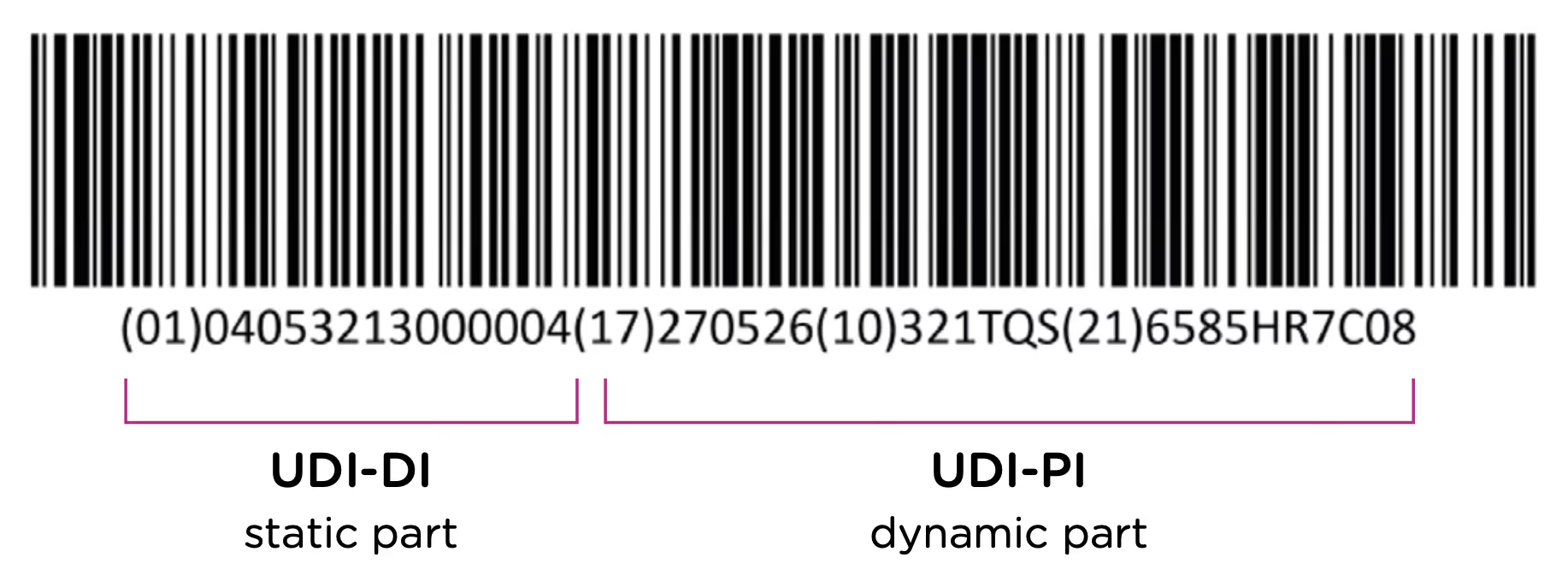
The UDI-DI contains information about the issuing entity—the organization that is authorized to assign UDI codes. In China, this can be one of three entities: GS1, an international barcode and electronic data interchange standards organization, and two domestic organizations: the Zhongguancun Industry & Information Research Institute (ZIIOT), and AliHealth. Additional details about the issuing agencies are covered in Chapter 2. In addition, the UDI-DI contains information about the manufacturer and the specific model or version of the device.
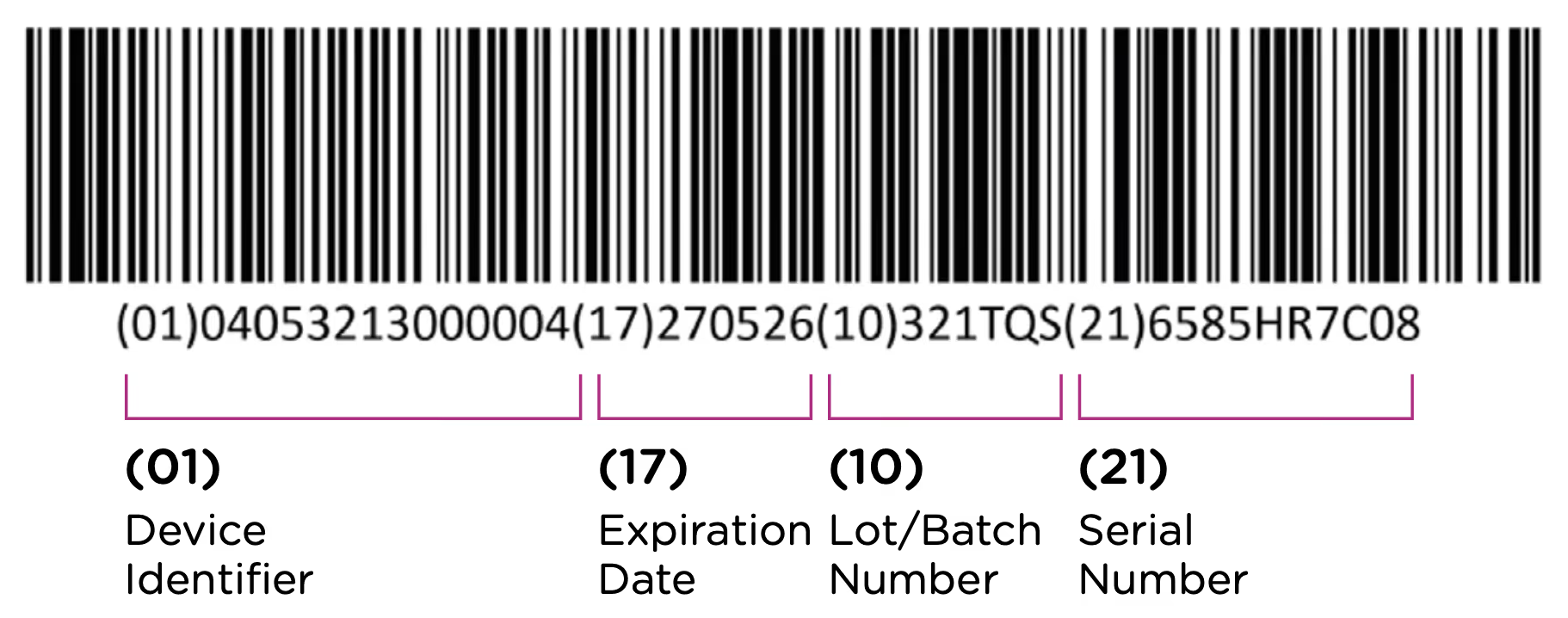
The UDI-PI contains information about the manufacturing and production of the device. This typically includes information about the lot or batch number in which the device was manufactured, the manufacturing date and expiration date for the device (if applicable), and the specific serial number for the device. Here you can see all of the components marked up using the same UDI example:
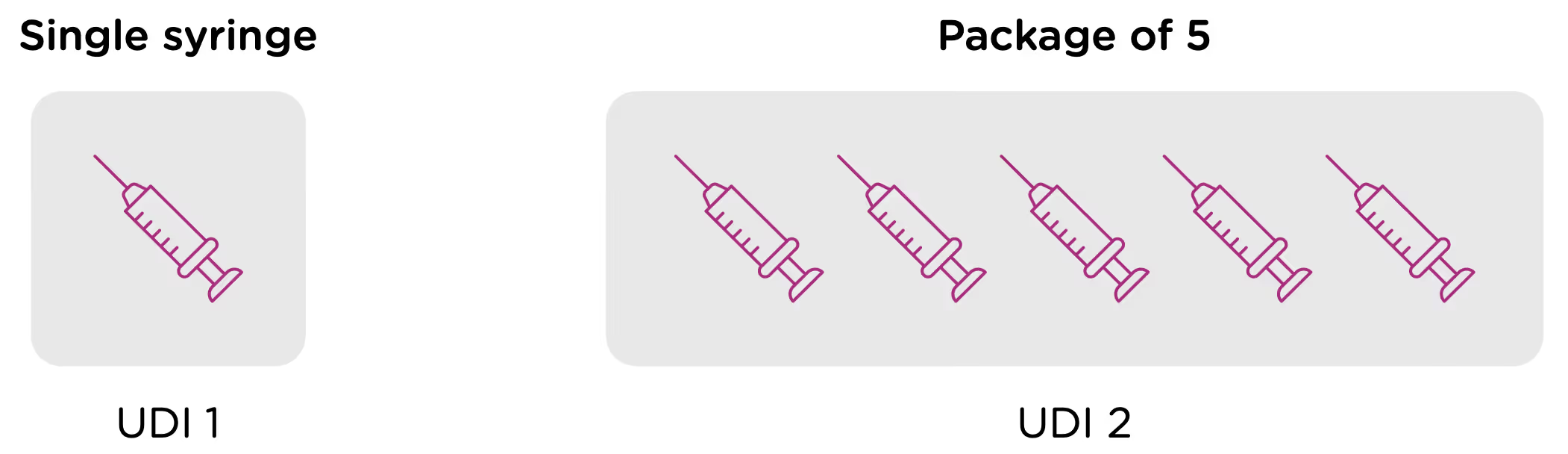
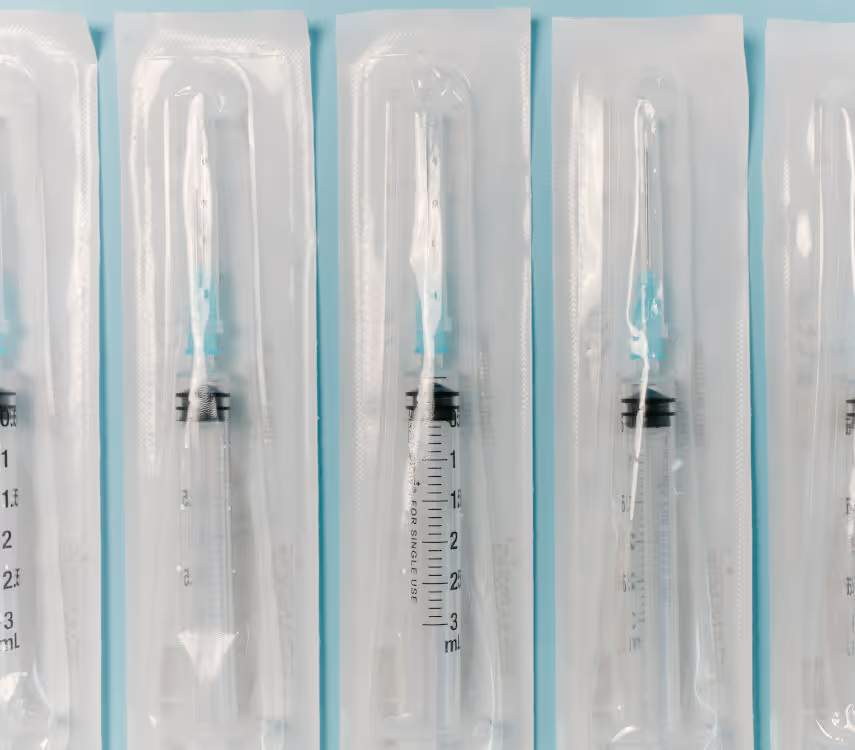
Note that each packaging permutation and level for a given device will need to be assigned its own UDI. So for example, let’s say that a company manufactures 5ml enteral (oral) syringes in two packaging options: 1 – packaged individually and 2 – packaged in a box of 5. Each packaging option would need its own UDI, despite the fact that the underlying product is the same.
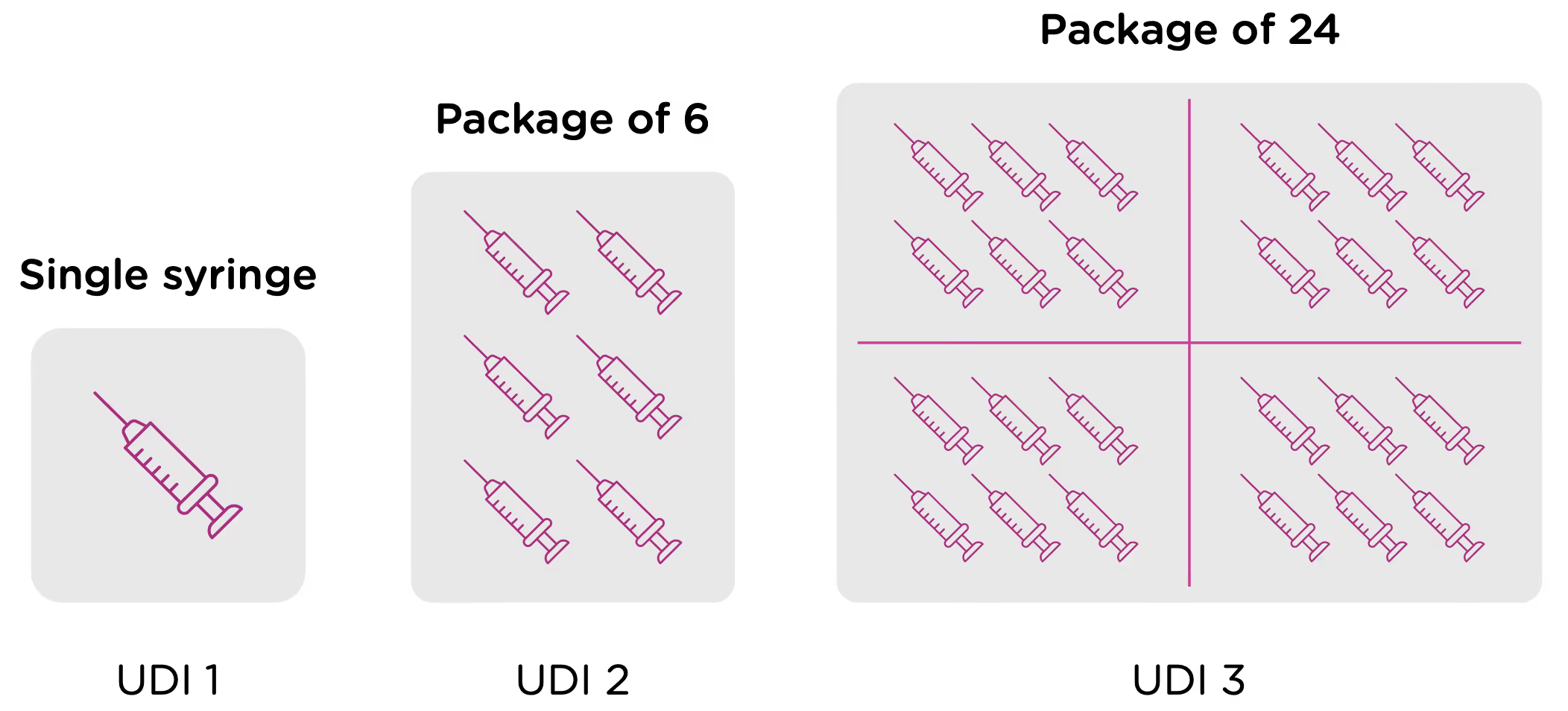
Now looking at packaging levels, let’s assume that the manufacturer packages the single syringe offering into boxes of 6, and again into larger containers of 24. Each of those packaging options needs its own UDI as well.
Labeling
In addition to obtaining UDI code for each device as outlined in the previous section, medical device manufacturers are required to ensure that devices are appropriately labeled with the assigned UDI. This label is called the UDI Carrier. The UDI is represented in two forms on the UDI Carrier: a machine-readable form and a human-readable form.
The machine-readable form or automatic identification data capture (AIDC) is a barcode or some other technology that can be used to automatically capture UDI information. The NMPA regulations support 3 types of machine-readable formats: 1-dimensional barcode, 2-dimensional barcode, and radio-frequency identification (RFID).
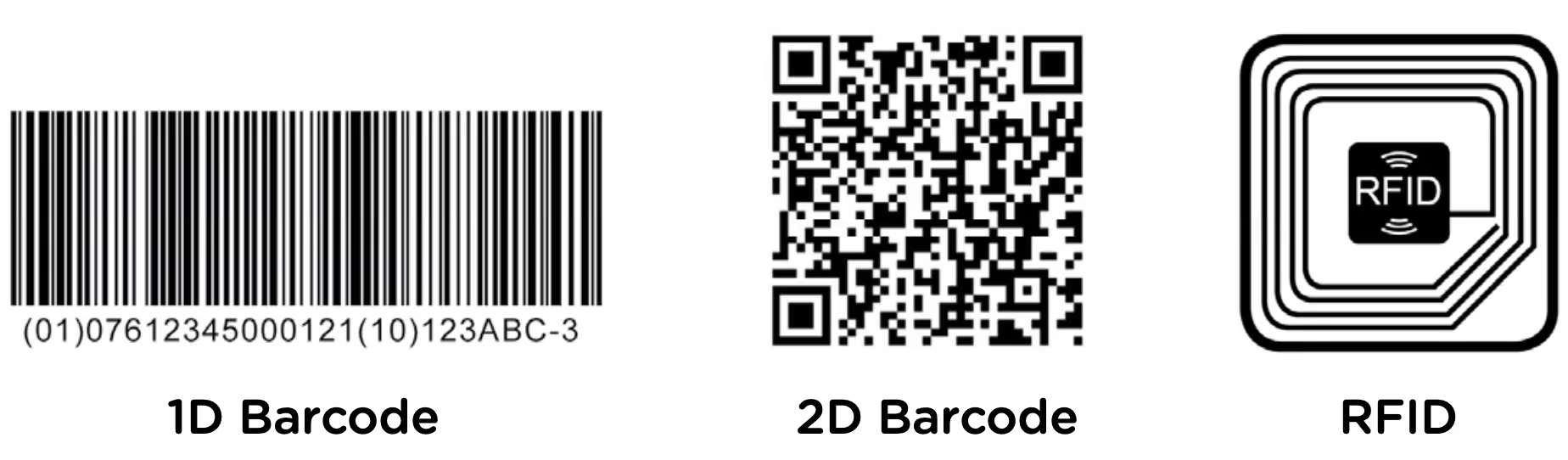
The regulations note that “use of advanced automatic identification and data collection technologies is encouraged”—prompting manufacturers to use more modern 2D and RFID machine-readable carriers where possible. Note, however, that if a device uses RFID, the UDI Carrier must also include the UDI in barcode format.
The human-readable form or human-readable interpretation (HRI) is the numeric or alphanumeric code for the UDI that can be read and manually entered into systems.
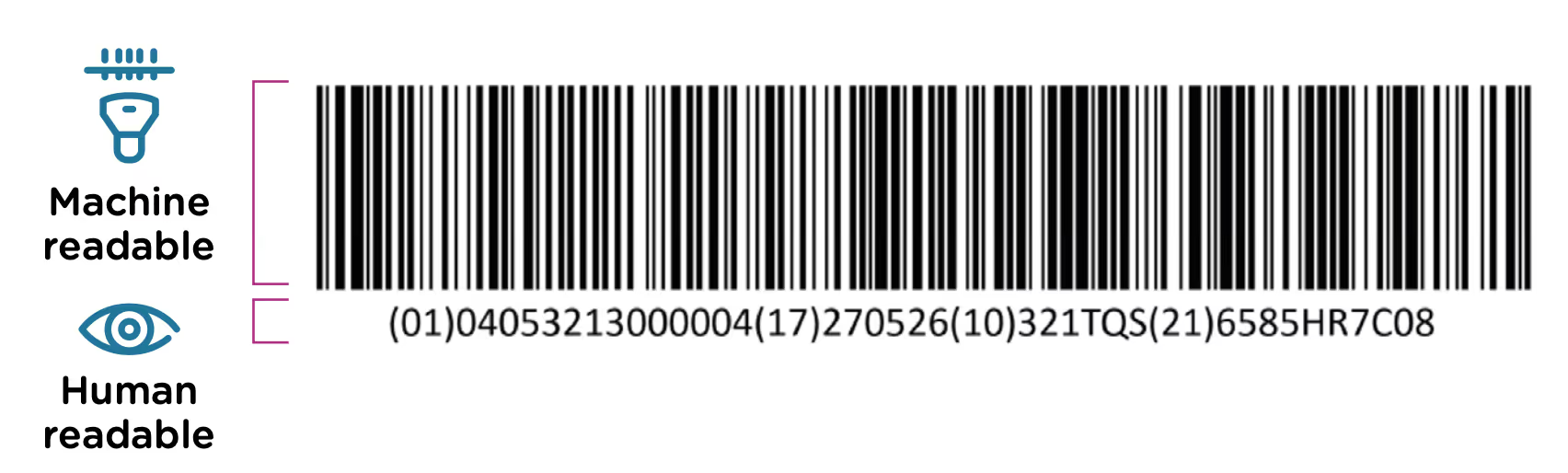
The UDI Carrier should be included on the device and on all levels of packaging. The UDI Carrier must be clear and readable during the operation and use of devices. If there isn’t room on the device for both the human and machine-readable forms of the UDI, then manufacturers should prioritize the machine-readable form.
UDI database
The third component of the NMPA UDI system is the UDI database. This is a centralized database of UDI and product information, administered by the NMPA. Manufacturers are required to submit UDI information into the database within 60 days after a product is approved (for sale in China) and before it is commercialized. The database contains a more detailed product record than what is included in the UDI itself, and it is the responsibility of the manufacturer (and/or their in-country representative) to submit the information correctly, and ensure that it’s kept up to date.
Chapter 3 of this eBook goes into detail about the specific fields and data requirements for UDI database submissions.
To continue reading this eBook including information about UDI format requirements and issuing entities, implementation timelines, and affected device types, please register to download the full version.

Ask us Anything ... about UDI!
Your UDI questions answered
Our first “Ask us Anything” webinar last week focused on the topic of Unique Device Identification (UDI). We had so many great questions that we couldn’t answer them all during the session! We have picked the most common questions and put them together here with the answers from our expert panel.
For additional information on this topic, see the following resources:
- Quick reference guide - global medical device UDI requirements and timelines
- BUDI-DI - Basic UDI explained
- The ultimate guide to the EU MDR/IVDR unique device identifier (UDI) system
- Watch a replay of the Ask us Anything about UDI webinar!
Q: I’ve heard that the EUDAMED timeline has been pushed back. Is that true?
Yes, that is true. The European Commission recently pushed back EUDAMED deadlines by one year. It is important to note that this does not affect UDI labeling requirements and timeframes, only the mandatory entry of UDI data attributes into EUDAMED (now Q2 2026). The industry should not relax their efforts in regards to collecting and submitting UDI data. We make every effort to keep our Quick reference guide: global UDI requirements and timelines up-to-date and deadlines and regulations change.
Q: Are we expecting the FDA to be actively enforcing UDI regulations against class I manufacturers after September 2022?
Following this session, the FDA announced that they do not intend to enforce GUDID submission requirements for class I and unclassified devices, other than implantable, life-supporting, or life-sustaining devices.
Q. What governing body controls the correctness of GUDID data?
While the manufacturer is responsible for the accuracy of data they input into GUDID, the FDA is the agency that oversees the requirements.
Q: I have a UDI for a software device (SaMD) that includes features that will be included in a clinical study and features that will be part of the commercialized release version. Do I need to have separate UDIs or can I add the IDE label under a single UDI for the clinical version and keep the UDI for the market released version?
To fully answer this question, we might need a little more information. However, if the device involved in the clinical study is not released (i.e. marketed), then it would not require a UDI. If additional features are introduced during the clinical trial and a new product is released as a result, then a new UDI would be required.
Q: Can you provide insight into machine-to-machine transmission of UDI information?
Currently, the U.S. UDI database, GUDID, has the capability to accept machine-to-machine data transmission. More information can be found on the FDA website here. Most other major markets are working on providing this capability.
Q: How do I make a UDI implementation plan for the QMS process? What things need to be covered?
This is a broad question and there could be many different answers based on your product, QMS, and company structure. Generally speaking:
- UDI should be integrated within your Design Controls/Development processes, including the company product release process. You cannot market your device into a country without complying with their UDI requirements. Some countries require UDI information as part of the device registration process (e.g., EU and China).
- The company needs to establish accounts with the Issuing Agency (e.g., GS1) and with the country UDI databases (e.g., U.S. FDA GUDID)
Main things to consider:
- Labeling: Barcoding software and a process for creating the labeling
- Product UDI data attributes: All product related characteristics that are required to be recoded in the country UDI database. The specific characteristics/attributes can be found in the various country UDI guidance documents.
- Define methods for capturing, storing, controlling, transmitting data attributes (e.g., a RIM system, PLM system or both).
- Establish processes for maintaining the data including the country requirements (timeframes) for updates to the UDI data and periodic audits (reference country UDI guidance documents).
Q: How do I know what UDI information needs to be supplied to regulators?
The FDA regulations and data dictionary are mature and include information and required data fields to complete successful transmission of data. Data field details include information on whether data is required or conditional on other data, lists of standardized values, and guidance on the data that is expected for each field. EUDAMED has taken a similar approach, and also includes information that is expected for BUDI. The EUDAMED data dictionary is still in flux. We expect a similar approach from other countries.
Q: When you are implementing UDI and have a kit or system pack, do you need to have a separate UDI for the device, accessories for that device, and a separate UDI for the kit (which would have those components)?
Generally, the UDI is assigned at the lowest sellable product level. In the case of kits, procedure packs, or systems - each would be given a unique UDI as well.
Q: Is the GUDID barcode and the UDI barcode on the product label the same?
There is no GUDID barcode, but the information on the UDI barcode is contained within the GUDID database. The barcode or human-readable numbers provide high level information about the device. They act as an access key to all of the device attribute data within the GUDID database. The expected barcode on the product is the full UDI including the device identifier (DI) and the production identifier (PI). The GUDID is the FDAs regulatory database where labelers are required to submit information about the UDI DI.

Oh No! How to recover lost medical device certificates
Imagine that you have started working in a new position at a medtech company, and you’re trying to organize your current knowledge of the products, registrations, and information now under your charge. However, something feels off, and you realize that you cannot find all of your company’s current medical device certificates.
Lost medical device certificates are a more frequent occurrence in our industry. In fact, it’s my experience with the frustration of recovering lost medical device certificates that finds me writing this brief post about what it’s like to lose a medical device certificate and the strategies I’ve used to recover the lost information. We’ll even discuss what you can do to prevent having to live “The Tales of the Lost Document” in the future.
How do certificates get lost?
The most common factor in misplaced or lost certificates is human error stemming from lax filing systems with disjointed practices and team member departures. Many large medtech companies have a complex structure of emails and document storage sites (such as Sharepoint or Dropbox). These storage sites are often siloed, with different regulatory teams having varying excel spreadsheets, folder structures, and naming conventions to organize their regulatory submission workload.
In many companies, managing global medical device certificate information is a manual and burdensome process. The problem could be as simple as a file-naming mixup, or it could be a document your company hasn’t needed the certificate in so long that they simply lost track of it. Now let's talk about ways you can recover your lost certificates or information that’s missing from them.
How can you recover lost certificates?
The good news is that you can recover your lost documents in many cases, though it may take a bit of legwork. There are two primary strategies for finding lost medical device certificate information, and utilizing both is the best way to ensure you recover your lost certificates and information.
The first and often most successful pathway is to search through your internal resources.
Strategies for Searching through internal resources:
- Have you found every Sharepoint site used in the past five years?
- Have you checked previously recorded submissions of that medical device?
- Have you contacted IT to see if they can recover emails from a departed colleague? They might have sent emails with the certificate attached to them. Many regulatory professionals email a copy of the certificate to announce to the marketing teams they can begin product sales.
- Are you working with a distributor? Contact them and request knowledge on all of the current medical device certificates.
Other channels are available if you can’t find what you’re looking for in your company’s local storage.
The second strategy is to use governmental medical device registration databases. For example, if you’re registration information for a class 2 medical device, you could look it up in the FDA 510(k) database. Here are some examples of the international regulatory databases that may help in your situation:
United States - FDA
Canada - Health Canada
European Union
Australia
Belgium
Brazil - ANVISA
Singapore - Health Sciences Authority
Saudi Arabia - SFDA
If you are looking for a certificate that was approved by a notified body and not in a current database, you can contact the notified body, but you should expect to pay a fee for their services. It’s also important to note that not all countries and regulatory bodies have a database that allows companies to look up their certificates.
You may also have to accept that you can’t recover your medical device certificate or information. Not every country has a medical device database, and even those with a database often don’t contain the certificate itself. That’s why it’s critical to the efficacy of your RA operations that your team has the tools necessary to store, track, and share regulatory information and documents securely and efficiently.
How do you make sure this never happens again?
We understand that trying to find missing certificates is an administratively heavy burden. When you can’t find a certificate or its missing information, there’s no way to tell whether it’s lost forever until you’ve exhausted all possibilities and channels, which is why it’s much better to prevent losing documents altogether.
With the right tools, your RA team can store, locate, and share documents in a secure and largely automated environment. That means no more awkward conversations where you have to tell your boss you can’t find the expiring certificate for your company’s flagship medical device.
Rimsys is regulatory information management (RIM) software created by RA professionals from the medtech industry with RA professionals in mind. It empowers RA teams to store and track all certificates by product and country and even provides a portal where you can see all of your regulatory documents in a centralized view. Furthermore, you’ll receive emails when a certificate is about to expire, allowing you to act in ample time to prevent lapses in compliance and continue market access per your company’s global device strategy.
Learn more about how a RIM system can help your organization keep track of all its regulatory information in our “RIM Buyer’s Guide.”
Class III medical devices in the United States
What is a Class III medical device?
There are three classes of medical devices in the United States, all regulated by the Food and Drug Administration (FDA). Class III devices have the highest risk profile and therefore have the most significant regulatory requirements. In the United States, a Class III device is also a device that has no substantial equivalence to an existing Class I or II device. This means that if there is no device with similar intended use and indications for use, or if the device is using novel technology, it will be classified as Class III by default. To find substantially equivalent devices, use the FDA’s product classification database. Because medical device classification in the U.S. also depends on risk level, there are exceptions for novel devices with lower risk profiles (see De Novo classification process).
Examples of Class III medical devices
Class III devices “usually sustain or support life, are implanted, or present potential unreasonable risk of illness or injury.” Only 10% of medical devices marketed in the U.S. fall under this category.
Examples of Class III devices include:
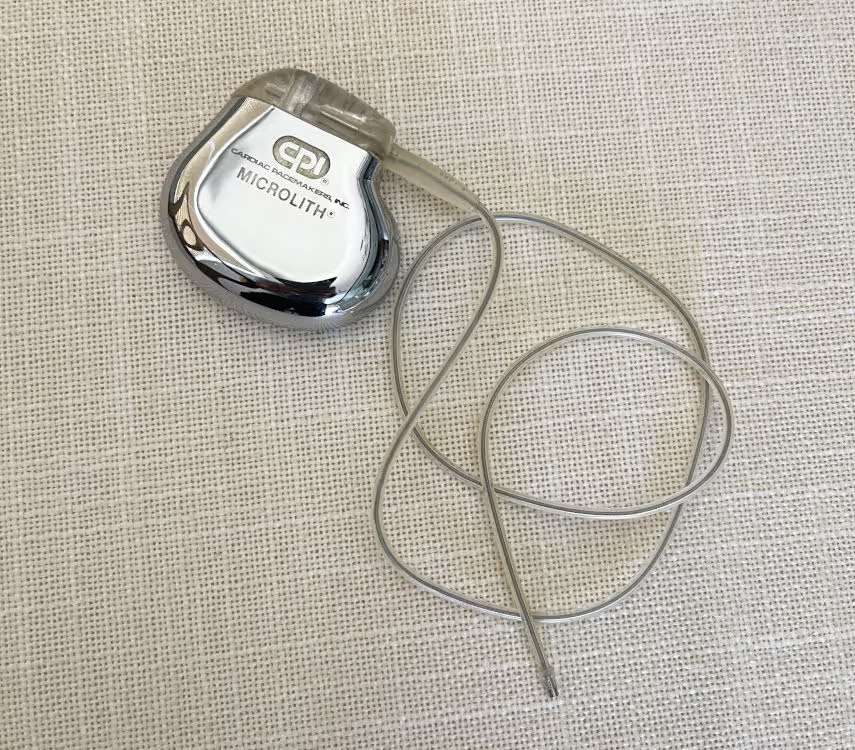
- Pacemakers
- Implanted prosthetics
- Cochlear implants
- Defibrillators
- Software defined as a medical device (Software as a Medical Device or SaMD), which meets the risk profile of a Class III device. This may include diagnostic software that is using imaging to identify conditions that, if misdiagnosed, would pose a risk to the patients health or life.
FDA regulatory approval process for Class III medical devices
Almost all Class III medical devices in the United States require premarket approval (PMA) from the FDA before being marketed. Due to the high risk profile of Class III devices, the PMA process requires significant data to demonstrate the safety and efficacy of the device. Unlike Class II devices which require a 510(k) premarket notification, the PMA process requires a thorough review by the FDA that results in their approval of the product for entry into the U.S. market.
The PMA process is defined in Title 21 Code of Federal Regulations (CFR) Part 814 and a full overview of the process is included in our Beginner’s Guide to the FDA PMA Submission Process. A PMA will almost always require:
- Substantial clinical trial data.
- A fully documented quality system compliant with design controls as defined in 21CFR Part 820.
- Documented conformance to recognized consensus standards.
- Detailed descriptions of the device and all of its components.
- Product samples and/or the ability for the FDA to examine the device on-site.
Note that there are exceptions to PMA requirements, most notably the humanitarian device exemption, designed to encourage investment in devices that would serve a small population. See the FDA’s Acceptance and Filing Reviews for Premarket Approval Applications (PMAs) for more information.
Post-market compliance for Class III medical devices
Medical device manufacturers and distributors must also conform with specific requirements once a product is being sold in the market. These requirements include:
- Mandatory reporting of device issues and adverse events by manufacturers, importers, and device user facilities (such as a hospital) as detailed in the Medical Device Reporting regulation (21 CFR Part 803).
- Tracking systems to support any necessary product recalls as detailed in 21 CFR Part 821.
- Post-approval studies that are required with the approval of a PMA, Humanitarian Device Exemption (HDE), or Product Development Protocol (PDP). Post-approval studies are a condition of approval and are mandatory.
Class III medical devices in other countries
Device classification is different in each country, therefore you should not make any assumptions regarding classification in other countries based on the fact that your device is a Class III device in the United States. Each country with medical device regulations has their own classification scheme that may cause your device to be regulated in a different way. During the initial phase of planning for global commercialization of a product, it is imperative that you consider international regulations, their classification schemes, and the registrations that each country will require.
For additional information on the Class III approval process, read our Beginner’s Guide to the FDA PMA Submission Process.
BUDI-DI - Basic UDI explained
What is BUDI?
By now, you should be familiar with the terminology surrounding UDI - The Unique Device Identification System. The United States FDA, the European Commission, and other regulatory bodies around the world have developed UDI regulations for medical devices and in vitro diagnostic devices that involve both labeling and database registration requirements. In the EU, UDI regulations were introduced under Regulations (EU) MDR 2017/745 and (EU) IVDR 2017/746. There is UDI, UDI-DI, UDI-PI - so then what is a BUDI-DI?
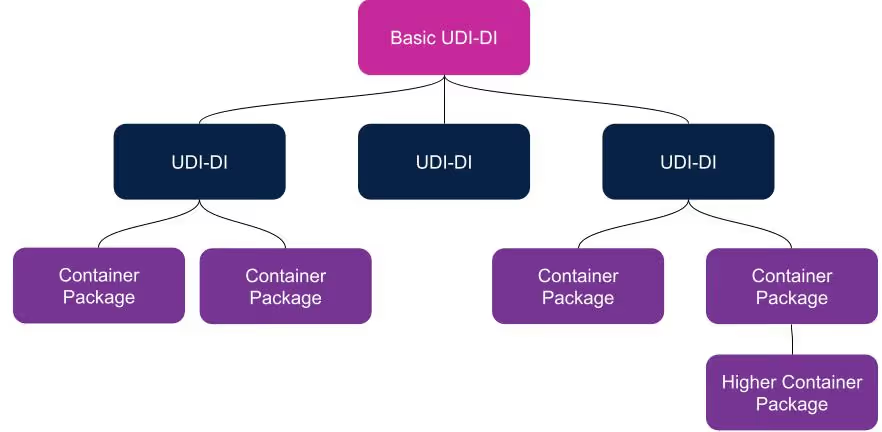
BUDI is an abbreviation for “Basic UDI” and is commonly pronounced “Buddy.” A BUDI-DI is unique to the EU and allows devices with multiple UDI-DI’s to be grouped together. It is necessary whether you have one device group (sometimes referred to as device ‘family’) or have many different device configurations such as systems, procedure packs, or kits. The general rule is there can only be one BUDI-DI to many UDI-DI’s and never multiple BUDI-DI’s to just one UDI-DI. The only time a BUDI-DI is not required is for a custom-made device, which generally doesn’t fall into the UDI requirements of the MDR/IVDR anyway.
A BUDI-DI allows manufacturers to connect and identify device groups with the same intended purpose, risk class, essential design, and manufacturing characteristics. It is an identification number that is only used for administrative purposes. It is required in the EUDAMED database and is referenced in relevant documents such as certificates, declarations of conformity, and technical documentation. If the device requires Notified Body review, then the BUDI-DI should also be listed on the CE Certification and the Certificate of Free Sale.
A BUDI-DI is the key that unlocks the EUDAMED and provides access to all of the product information.
- It’s the primary identifier of the device group/family
- It’s the main record key in the EUDAMED
- It’s the main product identifier in the regulatory documentation
- It’s independent of packaging and labeling
UDI issuing agencies
The manufacturer is legally responsible for utilizing a human-readable BUDI-DI assigned by an approved UDI issuing agency, such as HIBCC or GS1. The format of the BUDI-DI will vary slightly depending upon which issuing agency you work with. Currently, the only approved issuing agencies in Europe are GS1, HIBBC, ICCBBA, and IFA.
Per the MDCG 2019-1 guideline, each agency must:
- Create a code format that is close to the existing UDI-DI format
- Use no more than 25 total characters
- Assign a check/digit character that was determined by an algorithm
A BUDI-DI cannot be changed. A product UDI-DI created because of a new product variation or changes to the UDI-DI data elements can report into an existing BUDI-DI.
The EU provides an EU UDI Helpdesk to assist with navigating UDI requirements and answering questions device manufacturers may have.
Note that EUDAMED registrations, including BUDI-DI numbers, are currently recommended but not required. Use of the EUDAMED databases will not become required until all six databases are live, which is expected to be in Q2 of 2023, with a 24-month transition period.
Read our Quick reference guide - global medical device UDI requirements and timelines for additional information on general UDI requirements.

RIM Readiness: What your medtech company needs before implementing a regulatory information management system
Regulatory Information Management (RIM) systems provide a single platform for regulatory teams to manage submission and compliance data, reducing administrative overhead and increasing confidence in a company’s global regulatory data. RIM systems can digitize and automate a broad set of regulatory activities from new product submissions, to registration and standards management, to UDI data management. These capabilities can significantly improve RA efficiency and effectiveness - reducing workload for new releases by over 80% and maintenance time for technical files more than 90%. However, not all organizations can realize results like these immediately. When deciding to implement a RIM system, medical device companies need to consider many factors and ensure that they have the needed systems, processes, and personnel in place.
Technology requirements
RIM systems are fundamentally about data. They first and foremost provide a system to collect (either directly within the system or through integrations) and centralize regulatory information, making it easily accessible across the organization. This means that in order for a RIM system to be useful, your data needs to be accessible to the system. Medtech companies without the following in place may not be ready for a RIM system:
- Digitized documentation: It is imperative that regulatory documentation, such as technical files and design history files, are in a digital format. If you still have older product documentation on paper in locked file cabinets - it’s time to get them digitized!
- Application infrastructure: RIM systems rely on data that is often stored in other applications, such as eQMS, PLM, or ERP systems. It is rare to implement a RIM system as the first application in a medtech company’s software stack. Medtech companies should have, at a minimum an eQMS system that is compliant with 21 CFR Part 820 and/or ISO 13485 and an ERP system in place before implementing RIM.
- No competing major IT initiatives: A RIM implementation is a major project that should be given dedicated resources and the attention of the management team. Consider the timing of a RIM implementation carefully if there are other majorIT projects, such as an ERP implementation or a major system upgrade.
Corporate priorities
It’s important to understand RIM projects as a true digital transformation. While it is primarily a technology implementation, the end result is a significant change in that way that regulatory affairs teams work. This change is very beneficial, but it’s still disruptive in the short term. Teams without the right leadership support and change management plans may struggle to realize value from their RIM investment.
- Digital transformation strategy: A RIM implementation is an integral part of a larger digital transformation strategy. Medtech companies that are most successful with RIM have a digital transformation initiative in place, and an understanding that they are driving organizational process change in addition to technology adoption.
- Recognized need: RIM implementations are significant projects that require resources and the attention of the management team. RIM projects are most successful when the management team recognizes that the status quo is not sustainable and places a priority on providing resources for the regulatory team.
Timing a RIM implementation
Medical device manufacturers who can benefit the most from a RIM system are those whose regulatory teams are, or will soon be, surpassing their ability to handle submission and product market data manually. For most medtech companies, the best time to start a RIM system implementation is about a year before they expect a significant increase in the demands on the regulatory team. While a RIM implementation rarely takes a year to complete, this will give you time to put in place the data and processes in time for them to be tested and accepted before the regulatory team is overwhelmed with other priorities. Consider:
- Expanding geographic reach: Expanding from one country or region into multiple markets creates significant complexity for regulatory teams. Manually maintained spreadsheets become insufficient for handling the ever-changing regulatory requirements in multiple countries.
- Growing product portfolio: Similarly to entering new markets, new products can exponentially increase the complexity of processes and data that regulatory teams need to manage.
- Greater product complexity or risk: Regulatory teams managing lower risk products, such as Class I products in the U.S., will not have as great of a need for a RIM system as those managing more complex products with greater regulatory requirements.
- Significant upcoming changes: Pending company acquisitions, changes to legal entities, major design updates, or other changes that would trigger re-registration activities mean significant increase in activity and risk for your regulatory team.
Teams and personnel
A RIM system empowers regulatory teams, allowing them to save time on administrative tasks and spend more time making sure their company’s products are entering markets efficiently and staying in market effectively. This means that a RIM system will be of use to a seasoned (almost always overworked) regulatory team. It is rare to implement a RIM system before an internal regulatory team is in place. If your company doesn’t have the following, then you likely won’t get full use or value out of a RIM implementation:
- Dedicated regulatory personnel: One or more regulatory professionals responsible for obtaining and maintaining market clearance for your products, and interacting with government health authorities.
- Committed management team: A management and executive team that recognizes the importance of a strong regulatory system, and is willing to commit the resources necessary to make it successful.
Think your team is ready for RIM? Not sure? Download our RIM readiness checklist or talk to us today!

ISO 14971: risk management for medical device manufacturers
What is ISO 14971?
ISO 14971 is the globally accepted international risk management standard for medical devices. This article discusses the most current version of this standard, ISO 14971:2019, currently considered the state-of-the-art standard.
ISO 14971:2019, provides the processes for identifying, evaluating, and mitigating hazards associated with the use of medical devices. While not mandatory, it is the most commonly used, industry-recognized standard to demonstrate conformity to when addressing product safety requirements. This article provides an overview of the standard, but should not be used as a substitute for the actual text of the standard.
As in the case of a quality management system, a risk management system addresses the full lifecycle of a medical device; including the design, manufacture, and use of the device. Also, while ISO 14971:2019 does not, itself, require the implementation of a quality management system, risk management is most often an important part of a strong quality management system.
Compliance with ISO 14971:2019 requires that a risk management system be established and maintained throughout the product lifecycle, and that all processes and results are stored in a risk management file. The risk management system will include processes for risk analysis, evaluation, and control. It is important to note that the standard does not define acceptable levels of risk for medical devices - this is left to the manufacturer to determine as part of their risk management processes. However, the guidance document, ISO TR 24971:2020, provides significant clarity and direction in interpreting the standard and developing a risk management system consistent with ISO 14971:2019.
EN ISO 14971:2019: EU harmonized standard
In the European Union, as of May 11, 2022, the specific version of the standard which has been officially recognized as a harmonized standard with current Medical Devices Regulation (MDR) ((EU) 2017/745 ) and In vitro Diagnostic Medical Devices Regulation (IVDR) ((EU) 2017/746), is EN ISO 14971:2019 and the amendment EN ISO 14971:2019+A11:2021. The amended version includes two Annexes, Annex ZA and ZB, which demonstrate the relationship between the standard and the risk management process required in the MDR and IVDR. The technical content of the two versions are identical and does not included any content deviations, unlike EN ISO 14971:2012, the version of the standard which is harmonized with the previous EU MDD and IVDD regulations.
Risk analysis
Under ISO 14971:2019 a manufacturer is required to document risk analysis activities and the results of those activities in a risk management file. These should include:
- Intended use and “reasonably foreseeable” misuse, along with all device characteristics which impact the safety of the device.
- Hazards (a potential source of harm*), both known and foreseeable.
- Estimation of risk for each hazard, based on the probability of occurrence of the hazard and possible consequences.
*Note: ISO 14971:2019 revises the definition of harm by excluding the word “physical” injury from the ISO 14971:2007 definition. The resulting ISO 14971:2019 definition of harm is “Injury or damage to the health of people, or damage to property or the environment”
Risk evaluation
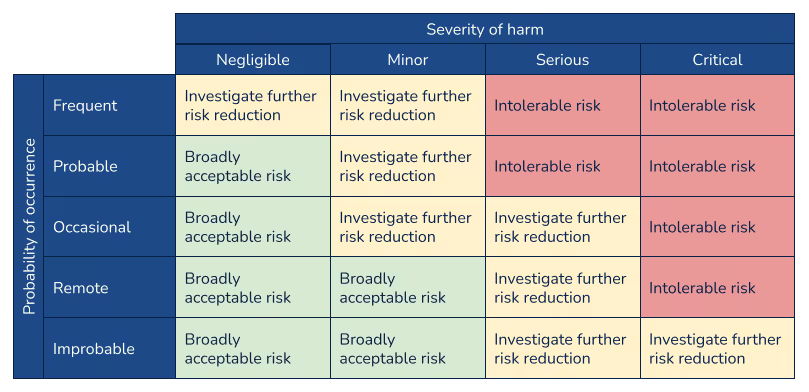
Risk evaluation involves the determination of whether a risk reduction is required for a particular hazard. Manufacturers should weigh the combination of the probability that a hazard occurs with the severity level of the hazard. A risk evaluation matrix, such as the following example, is often used to to visualize risk acceptability.
It is important to note that ISO 14971:2019 and TR 24971:2020 added significant emphasis and clarity regarding the evaluation of risk and establishment of risk acceptability criteria. Under the previous versions of the standard (both ISO 14971:2007 and EN ISO 14971:2012), there was confusion and a lack of guidance around defining acceptable risk. It was common to use a two-dimensional matrix showing severity of harm along one axis and probability of harm along the other, but with little guidance there were multiple interpretations of how to establish these criteria and these matrices were often used to define policy. The latest version of the standard and guidance, however, emphasize that the matrix should be the output of the risk management policy, which would define the criteria for risk evaluation.
Risk control
When a hazard is found to have an unacceptable risk level, risk control activities are put in place to mitigate the risk. ISO 14971:2019 requires that “state-of-the-art” best practices that are used for similar devices be employed. State-of-the-art does not necessarily mean the most advanced processes and technical features, but rather those that are generally accepted in the industry. Risk control options should include, in order of importance:
- Inherent safety by design and manufacture
- Protective measures built into the device or into the manufacturing process
- Provided safety information, and where appropriate, training to users
Risk/benefit analysis should be performed and where benefit is determined to outweigh risk, the manufacturer will need to decide what safety information is necessary to disclose.
Relevant standards should be applied as part of the risk control process whenever applicable. Some of the standards which reference ISO 14971:2019 include ISO 13485 (quality management systems), IEC 60601-1 (electrical safety), IEC/EN 62366 (usability of medical devices), and IEC 62304 (medical device software). This makes ISO 14971:2019 essential for manufacturers seeking market approval for a medical device in the U.S., European Union, Japan, Australia and many other major markets.
Production and post-production information
A substantial change in ISO 14971:2019 standard is the expansion of requirements for production and post-production activities. The manufacturer will need to perform a full review of the risk management process prior to commercial distribution. The review should ensure that the risk management plan has been appropriately implemented, the overall risk is acceptable, and that procedures are in place to gather and maintain risk data during production and post-production of the medical device. ISO 14971:2019 aligns closely with the ISO 13485:2016 section 8 requirements for feedback, analysis of data and CAPA. Information collected and reported should include any newly identified hazards, changes that affect risk analysis calculations, and results of regular reviews of the risk management file.
Management responsibilities
Medical device manufacturers who wish to demonstrate compliance with ISO 14971:2019 must have a management team that is dedicated to and supportive of the risk management system. This includes ensuring that adequate resources are assigned to support the system and that the personnel assigned are qualified for their respective responsibilities. In addition to enabling the implementation and maintenance of the risk management system, management is responsible for reviewing the system periodically to ensure continued effectiveness.
For more information about technical documentation/compliance for medical devices, check out our comprehensive ebook, The ultimate guide to EU MDR and IVDR general safety and performance requirements (GSPR).